Estamos processando sua solicitação.
Por favor, não feche nem atualize a página.
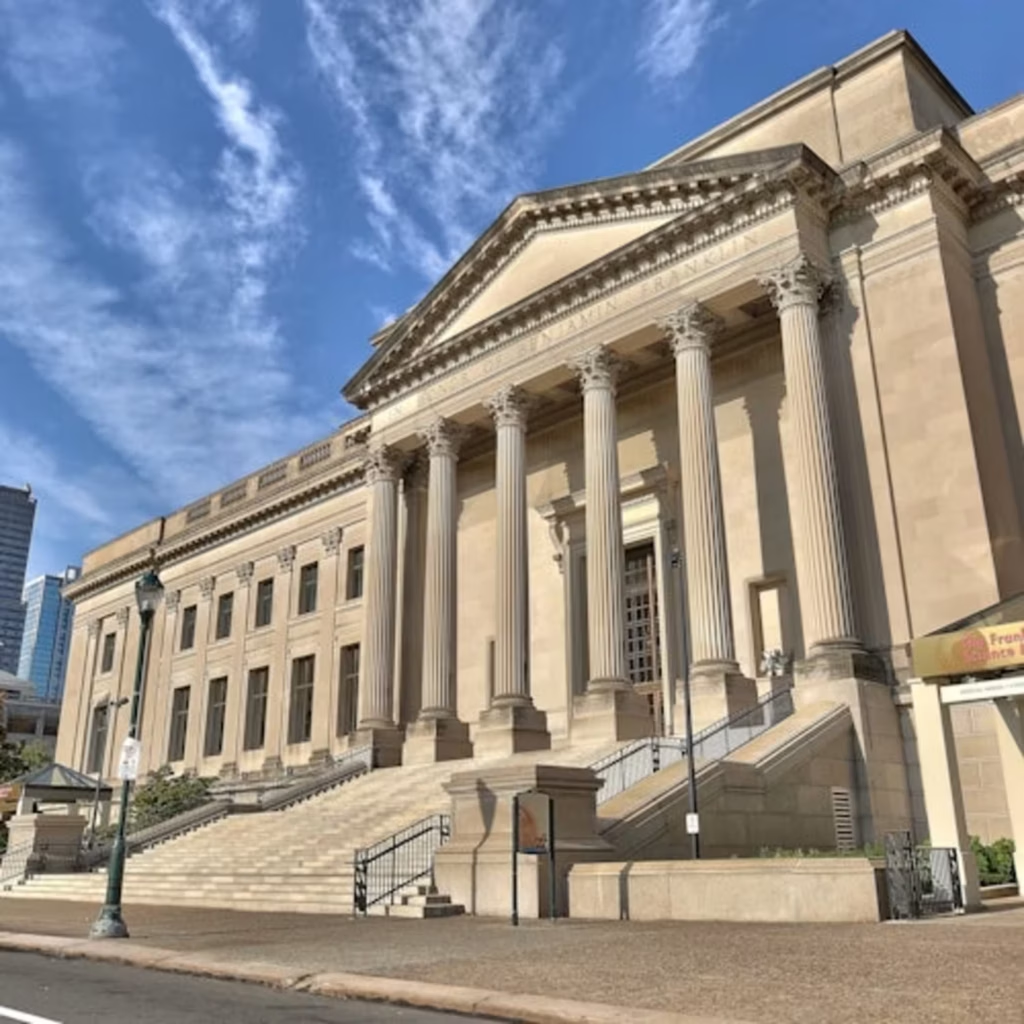
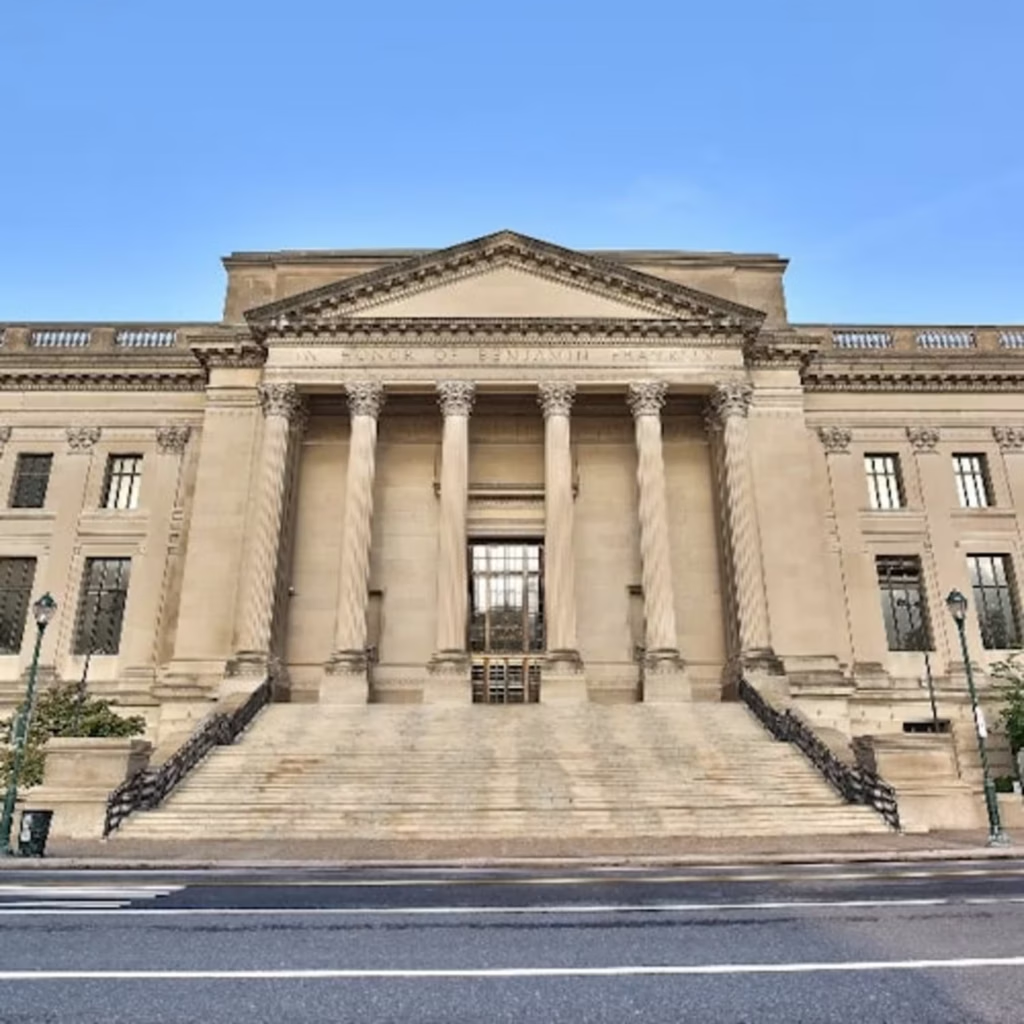
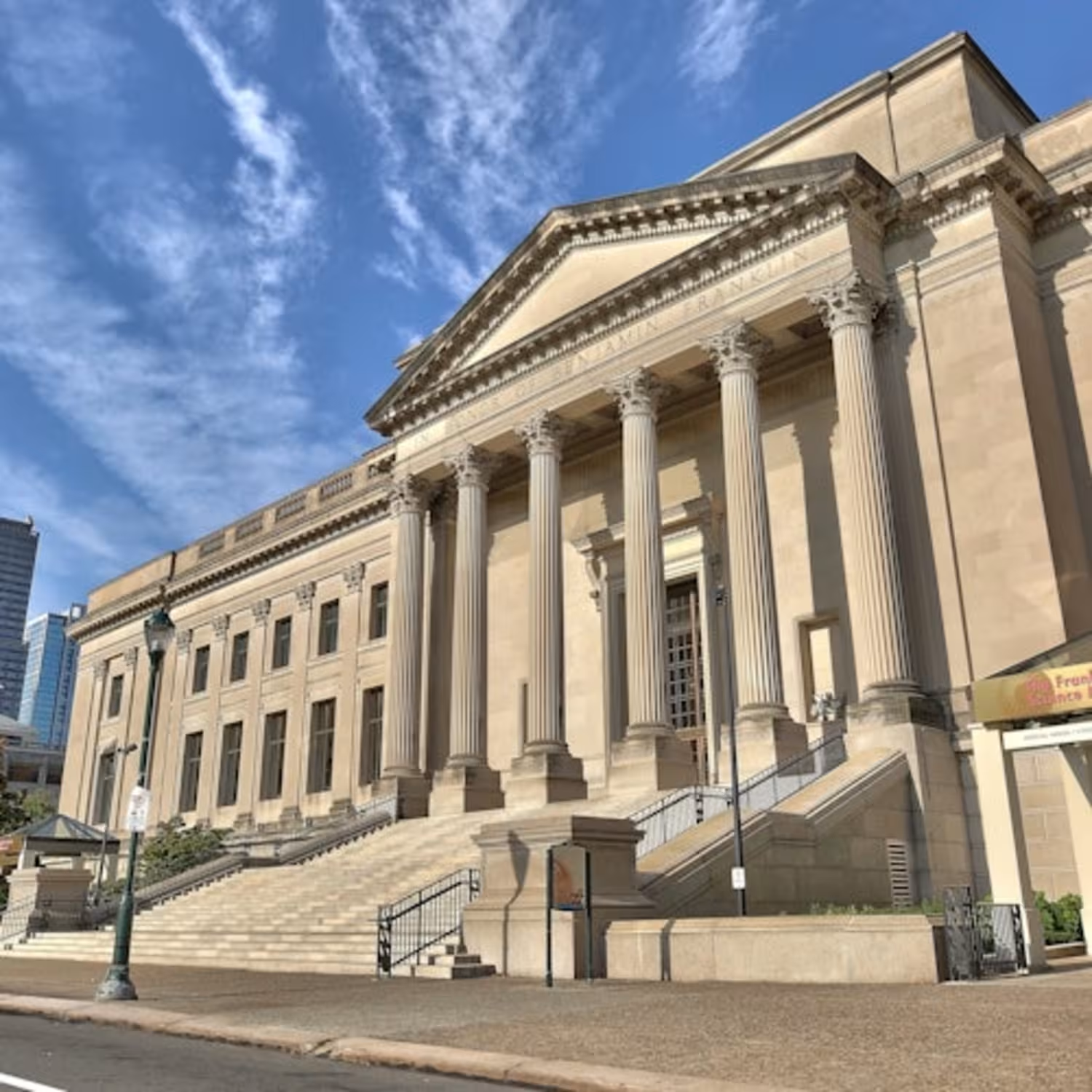
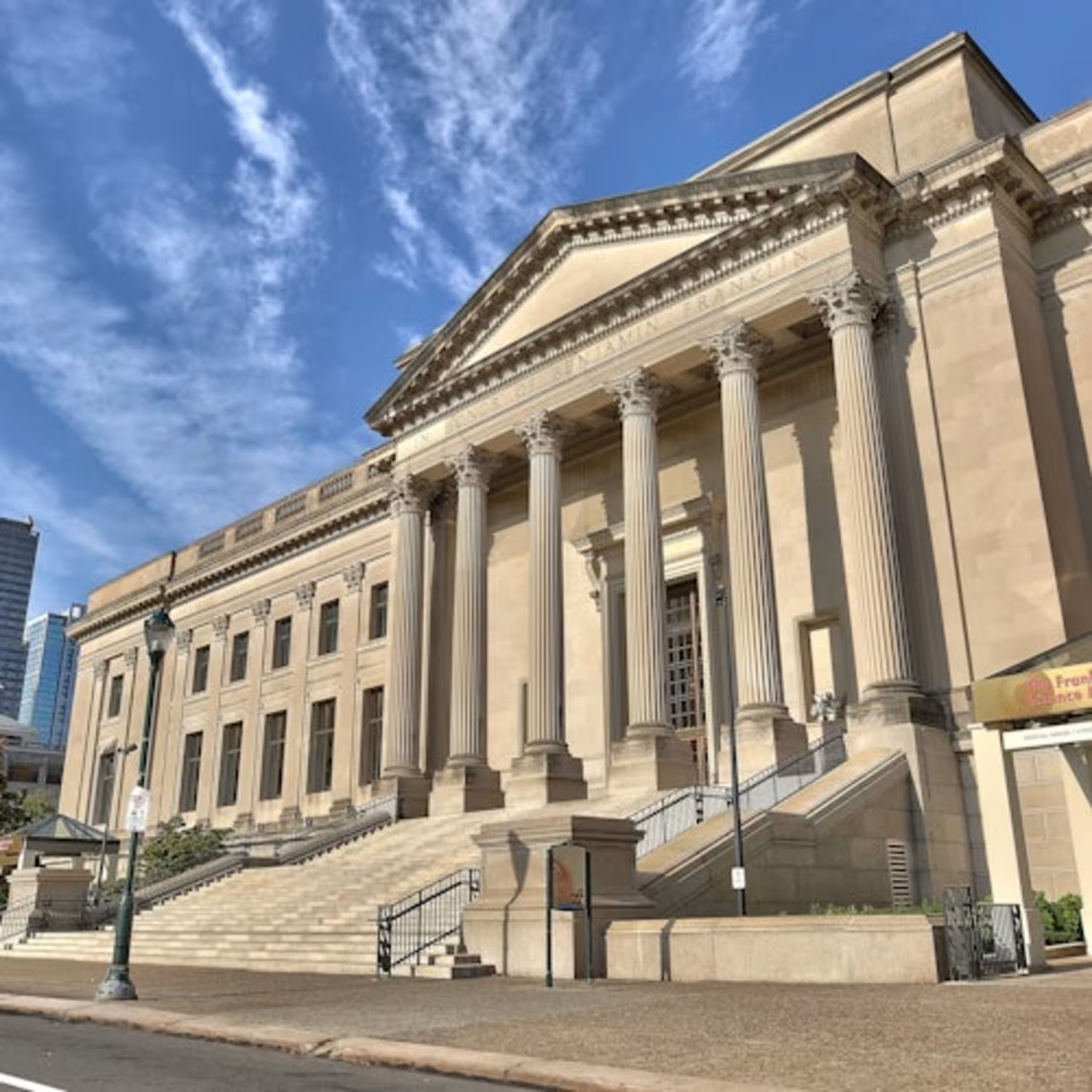
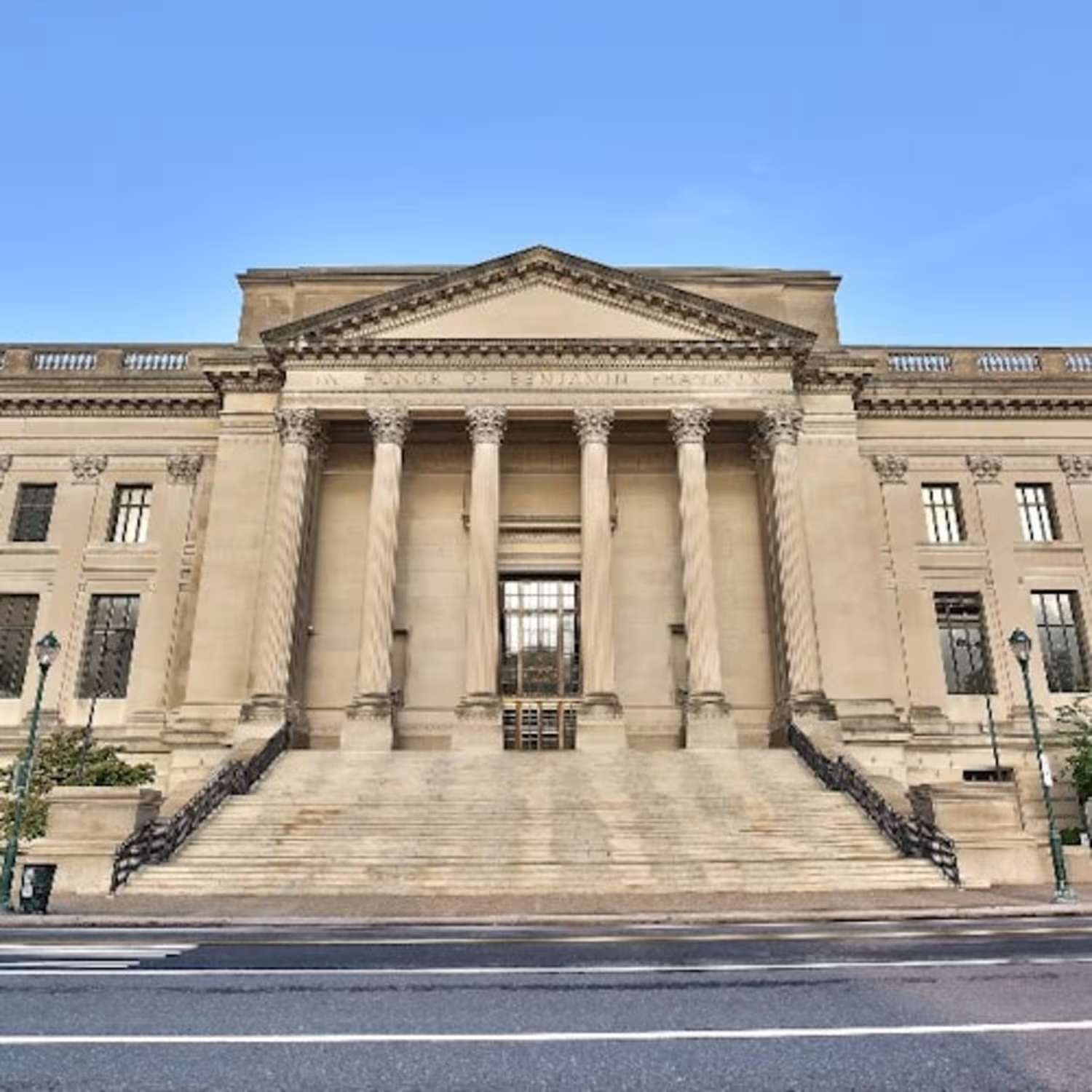
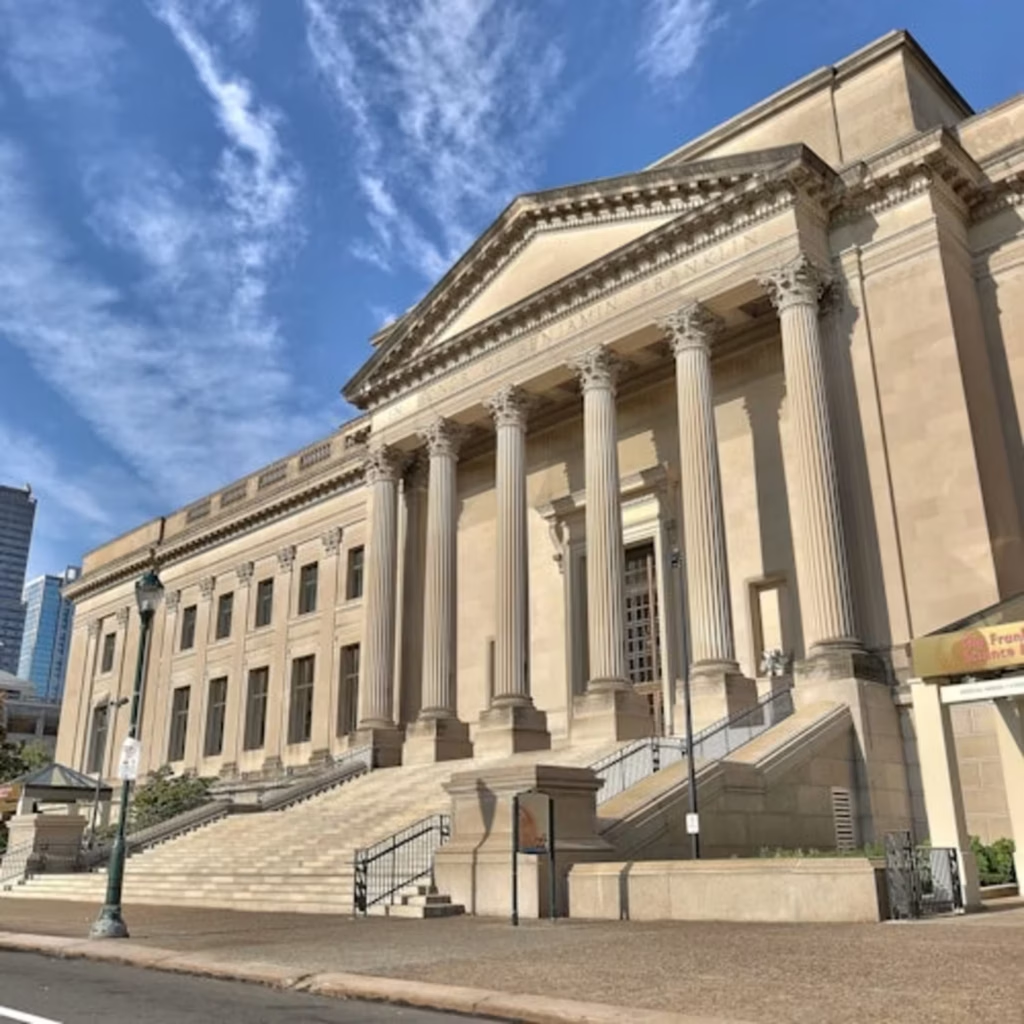
The Franklin Institute building in Philadelphia

The Franklin Institute Exhibits: What to See

From the climb-through Giant Heart to Wondrous Space, the Fels Planetarium and the Baldwin 60000 locomotive: the exhibits worth your time and how to plan the day.

The Franklin Institute has been one of Philadelphia's science landmarks since it was founded on February 5, 1824. Its 200th anniversary brought the biggest change to the galleries in decades: Body Odyssey, built around the famous Giant Heart, and the Hamilton Collections Gallery, home of the Baldwin 60000 locomotive, both opened on November 23, 2024, a year after the two-story Wondrous Space. This guide walks you through the exhibits that matter most, from the Neural Climb in Your Brain to the Benjamin Franklin National Memorial and the Fels Planetarium, so you can decide where to spend your time. For tickets, transport and the rest of your visit, see our Franklin Institute visitor guide.

4.5
(40)

The Franklin Institute: Ingresso

Destaques

Experimente exposições científicas interativas que dão vida à tecnologia.

Participe de apresentações científicas ao vivo, realizadas diariamente, que ilustram conceitos científicos fundamentais.

Explore o renomado Planetário Fels e curta espetáculos espaciais cativantes.

Aprenda sobre astronomia, biologia humana e muito mais em diversas áreas de exposição.

Ideal para visitantes de todas as idades que queiram aprender e se divertir.
The Franklin Institute exhibits: key facts

The Franklin Institute was founded on February 5, 1824 and celebrated its 200th anniversary in 2024.

O Giant Heart debuted in 1954 as "The Engine of Life" and is about 15,000 times larger than a real human heart.

Body Odyssey, the 8,500-square-foot exhibit around the Giant Heart, opened on November 23, 2024.

O Baldwin 60000 locomotive weighs 350 tons and has been in the collection since 1933.

Wondrous Space opened on November 4, 2023 across two floors and 7,500 square feet.

O Fels Planetarium was the second planetarium built in the United States, after the Adler Planetarium in Chicago.

Body Odyssey and the Giant Heart

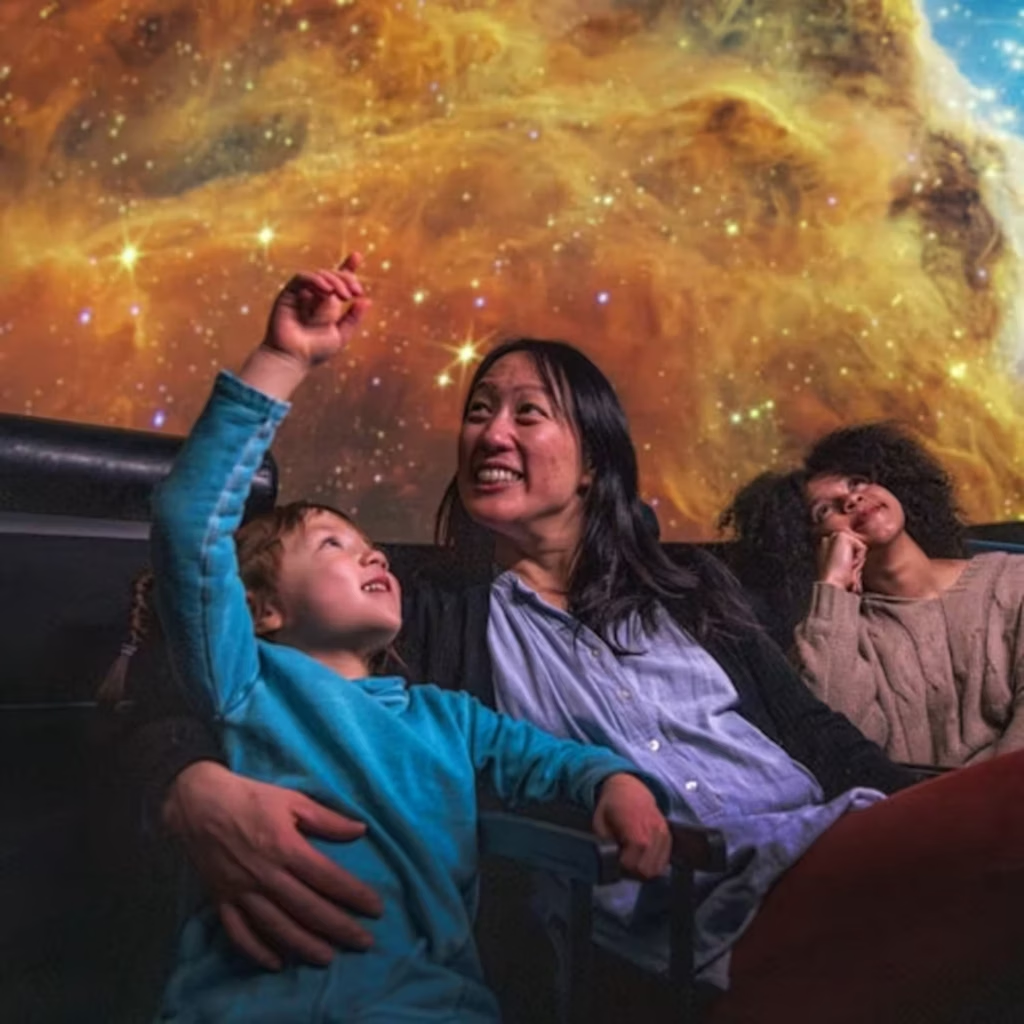
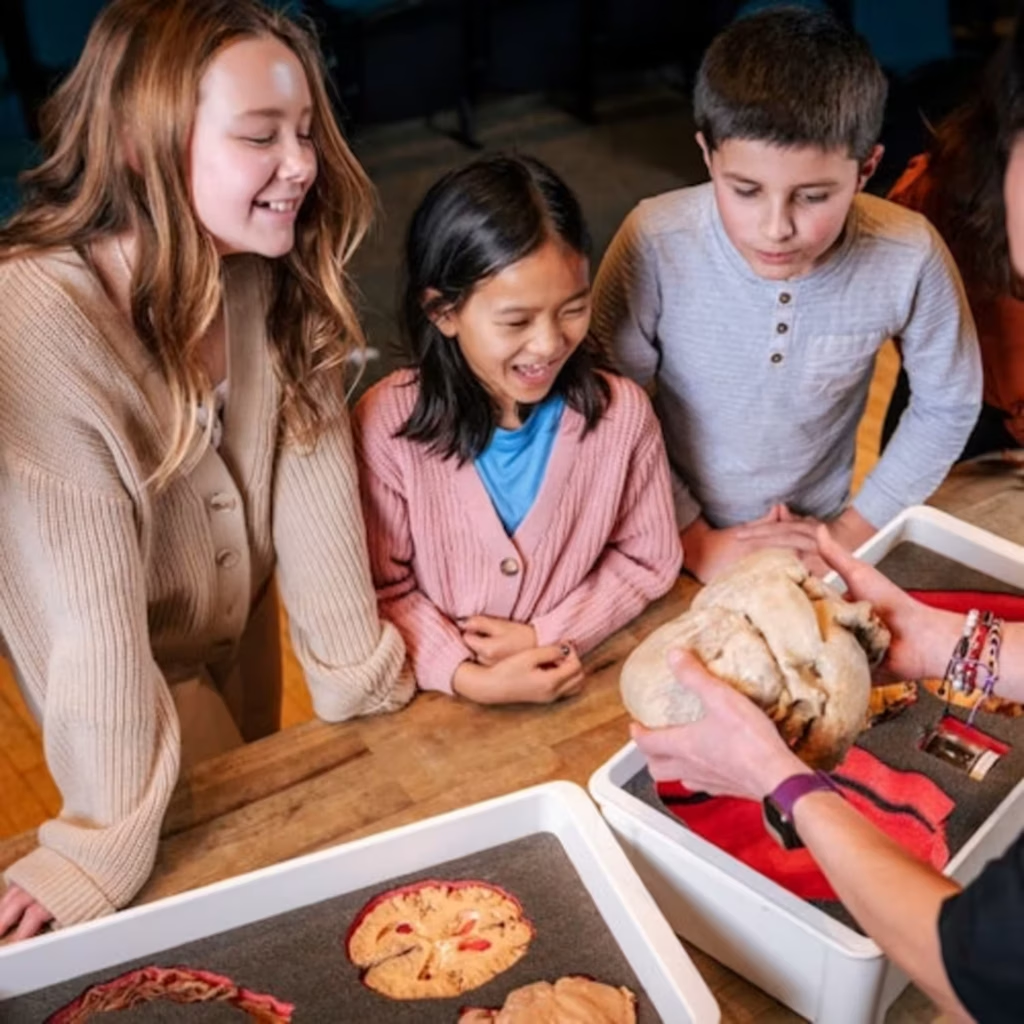
Family exploring a hands-on exhibit at The Franklin Institute

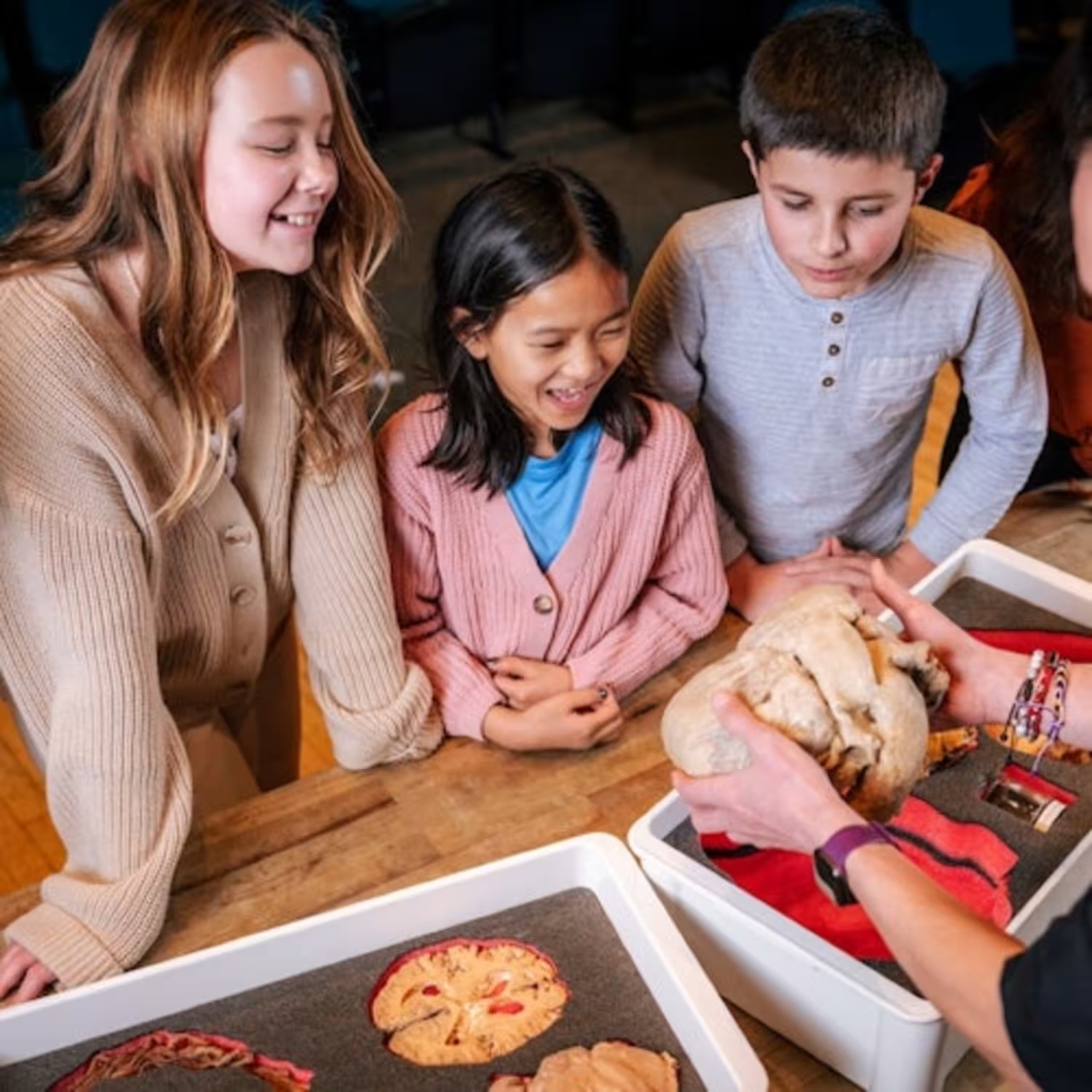
The Giant Heart is the exhibit generations of Philadelphians remember. It first opened in 1954 as "The Engine of Life", a papier-mâché sculpture of a human heart about 15,000 times life size, with tunnels and stairs you can climb through to see how blood moves through the heart. In its 70th year it became the centerpiece of a brand-new exhibit, Body Odyssey, which opened on November 23, 2024.

Body Odyssey covers 8,500 square feet and is organized into three areas: biological systems, biotech innovation and personal health. One of the newest displays lets you hear your own heartbeat translated into light and sound, and the hands-on stations explain how the body works and how technology is changing health care.

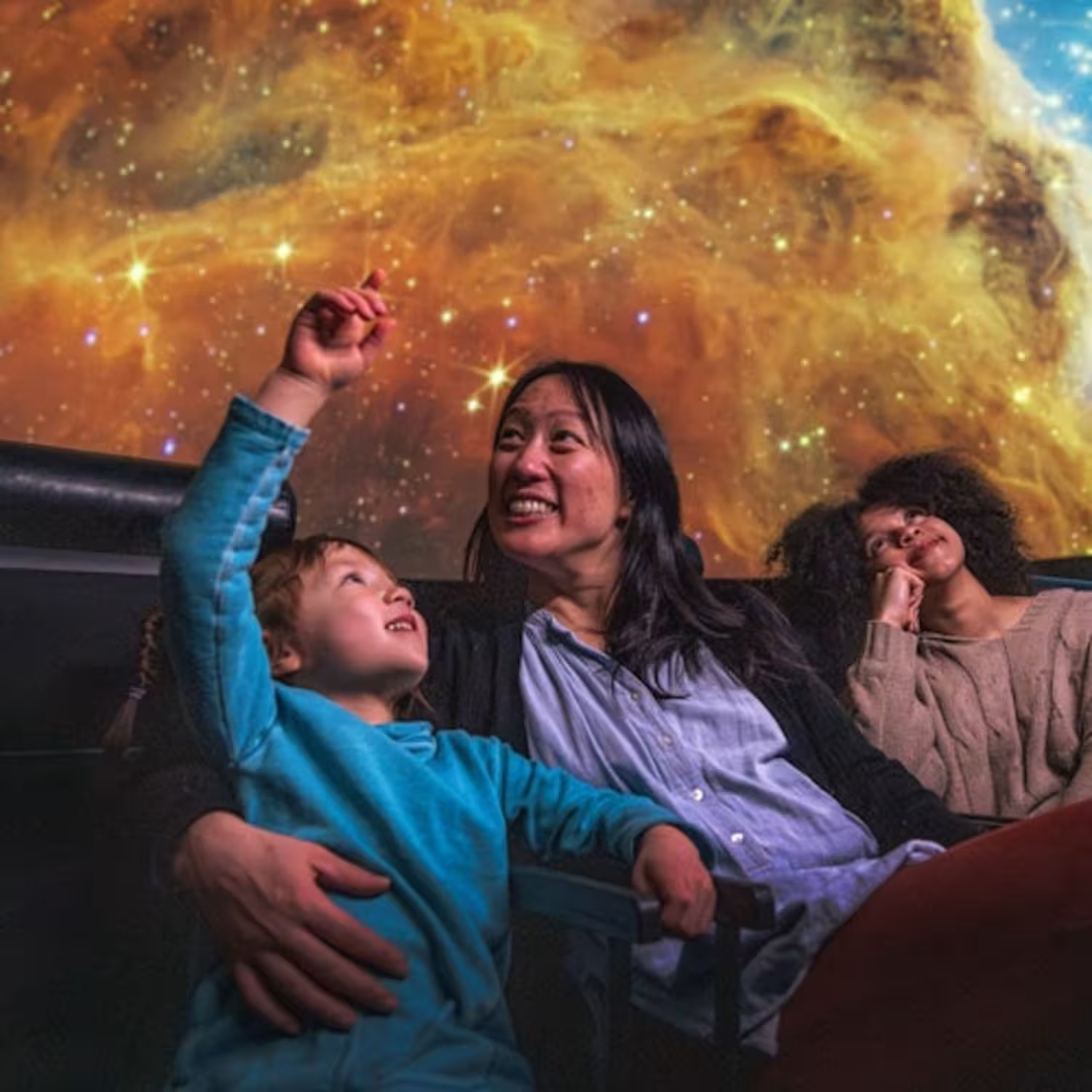
Wondrous Space and the Fels Planetarium
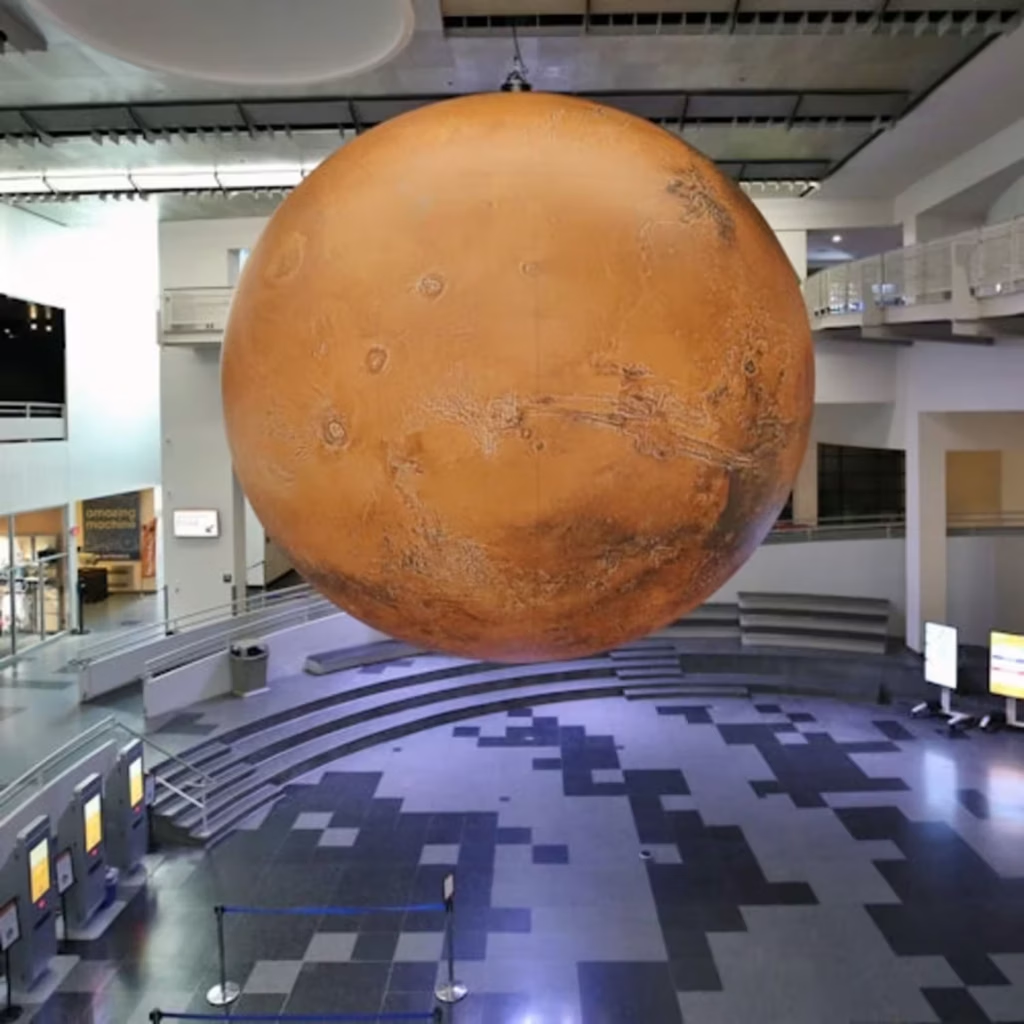
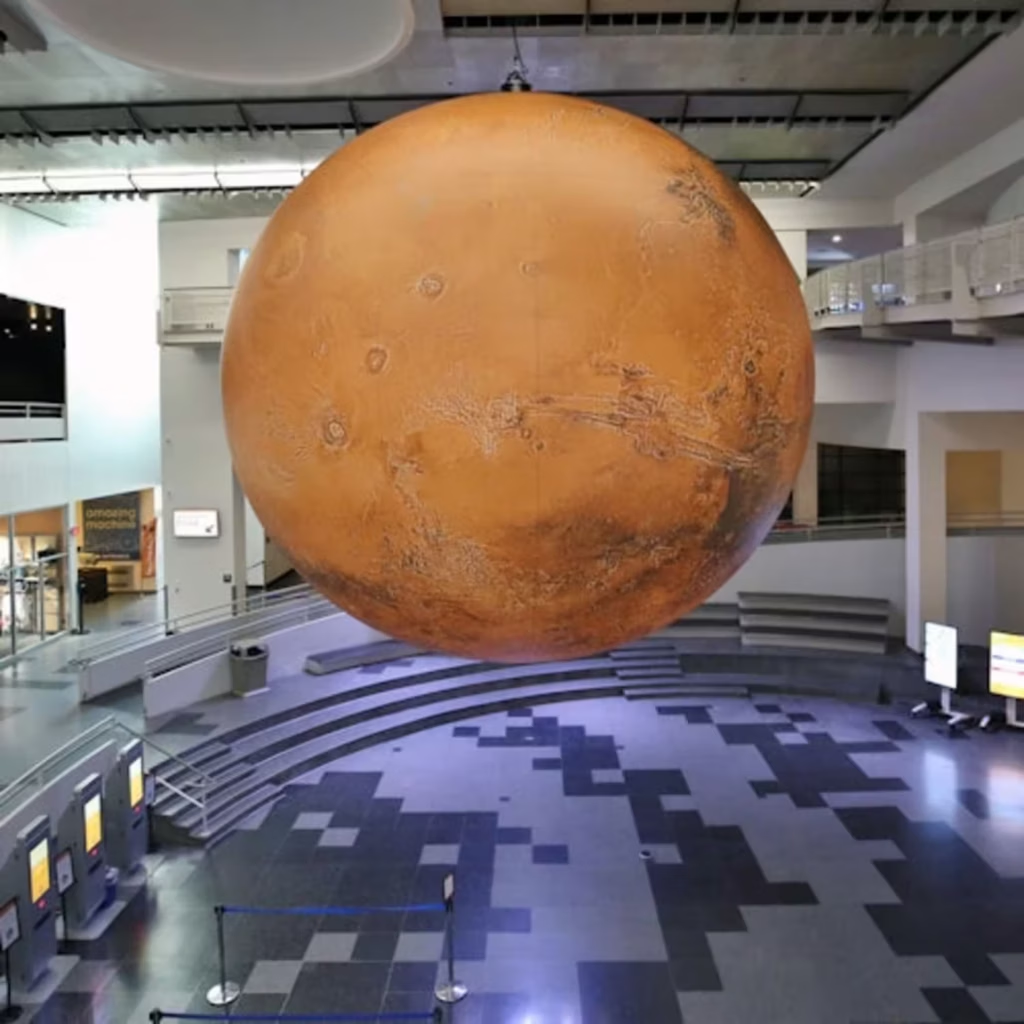
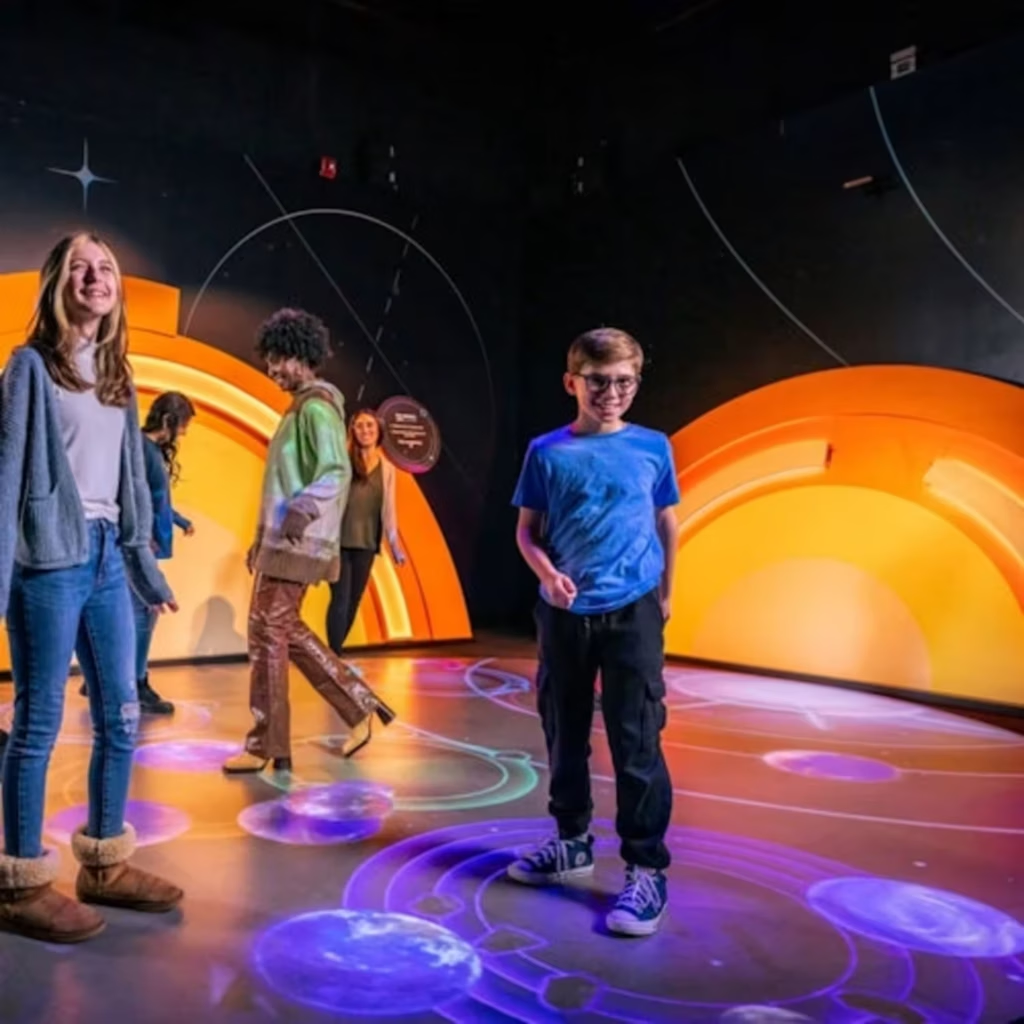
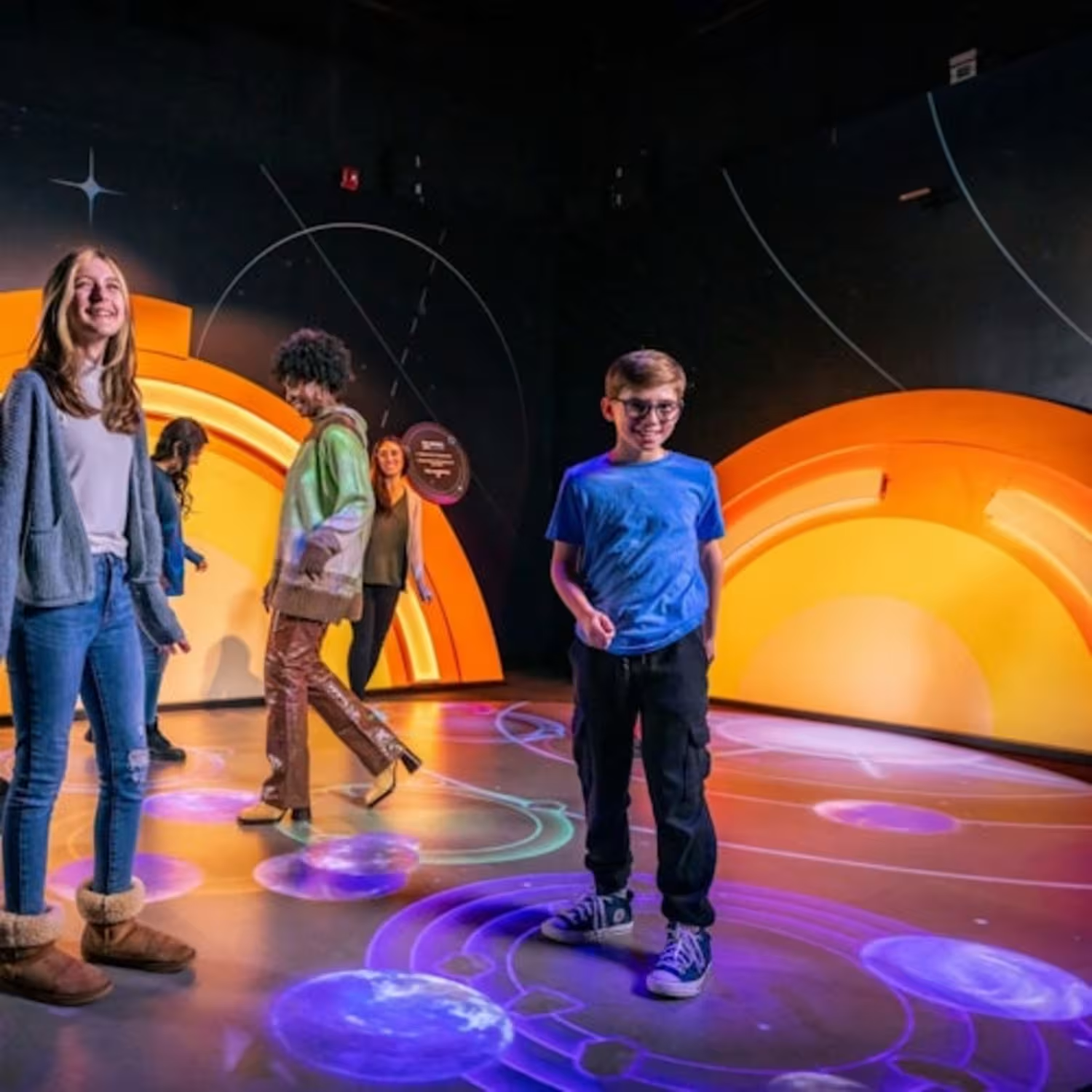
Large planet model inside The Franklin Institute

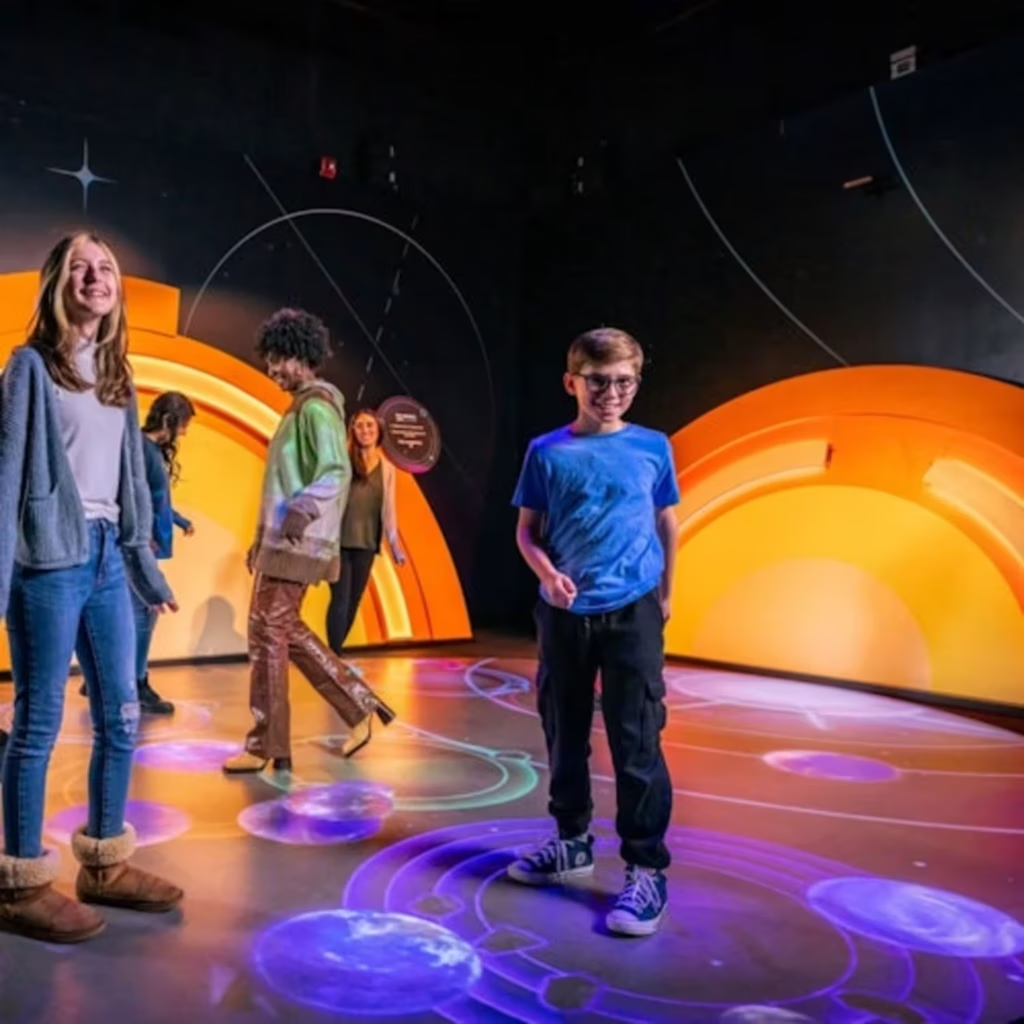
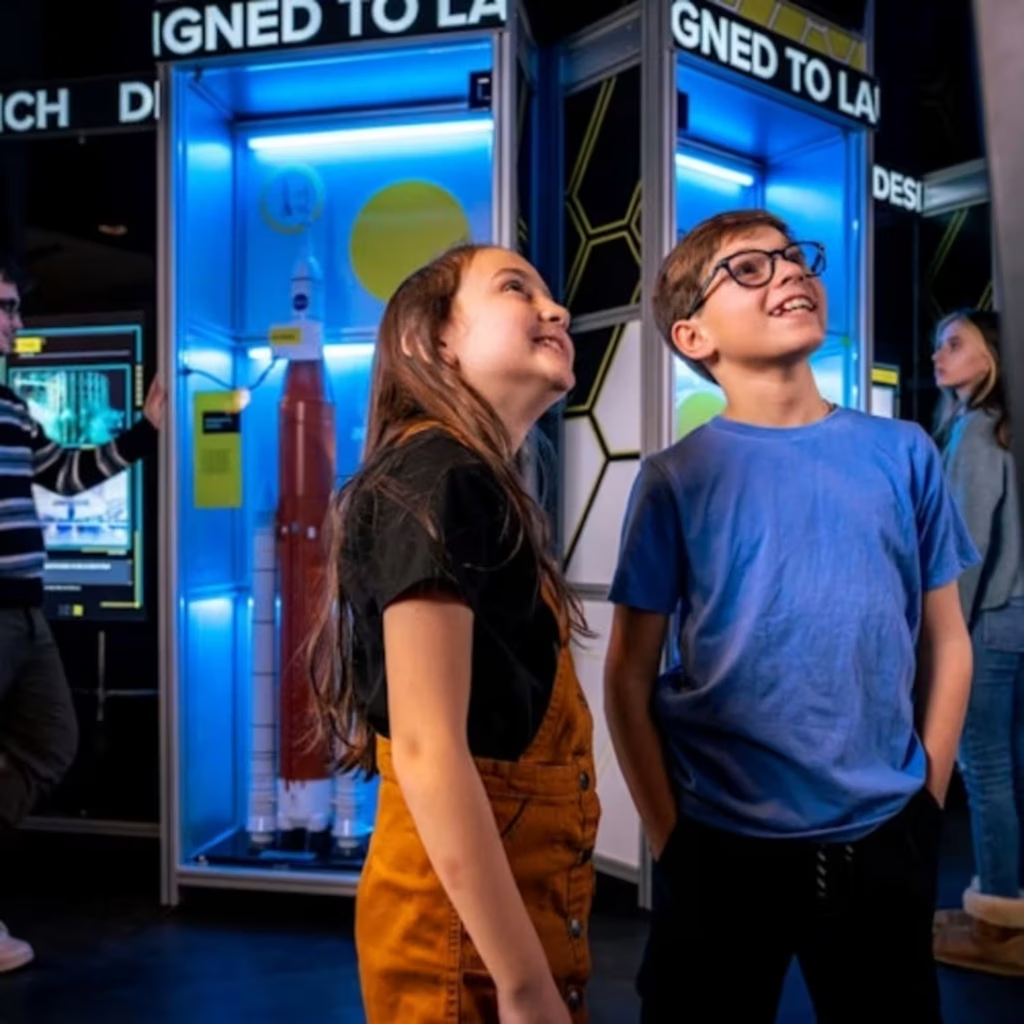
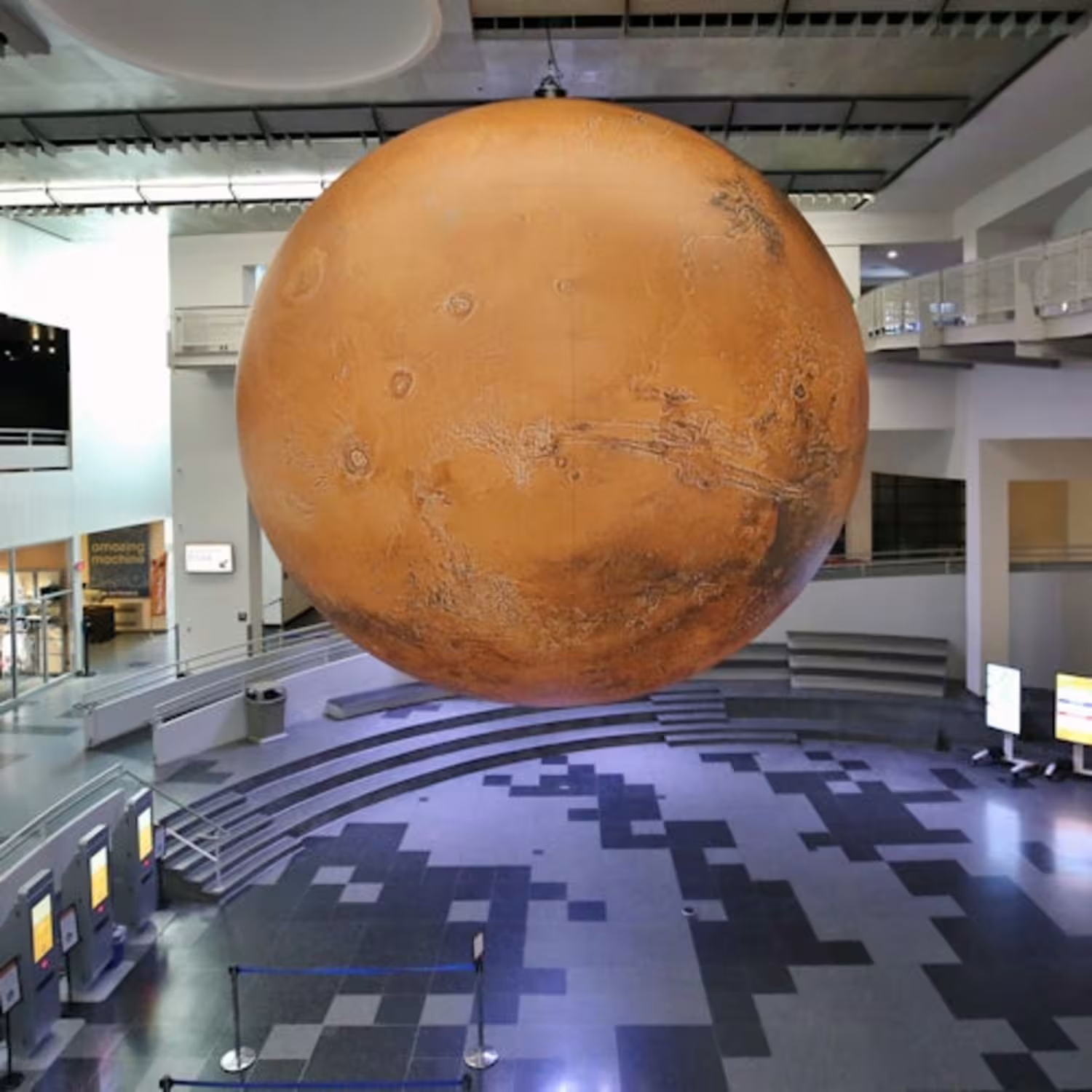
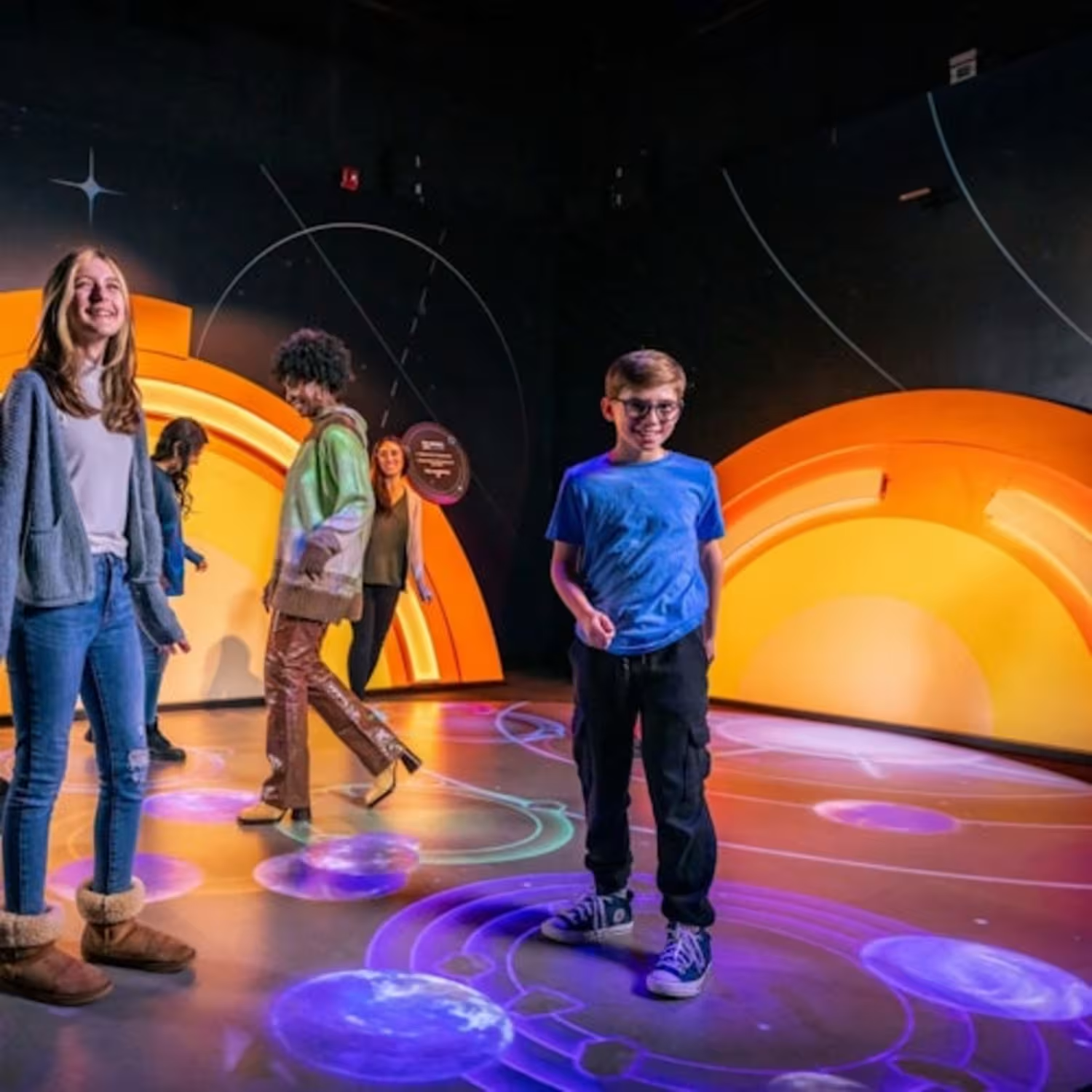
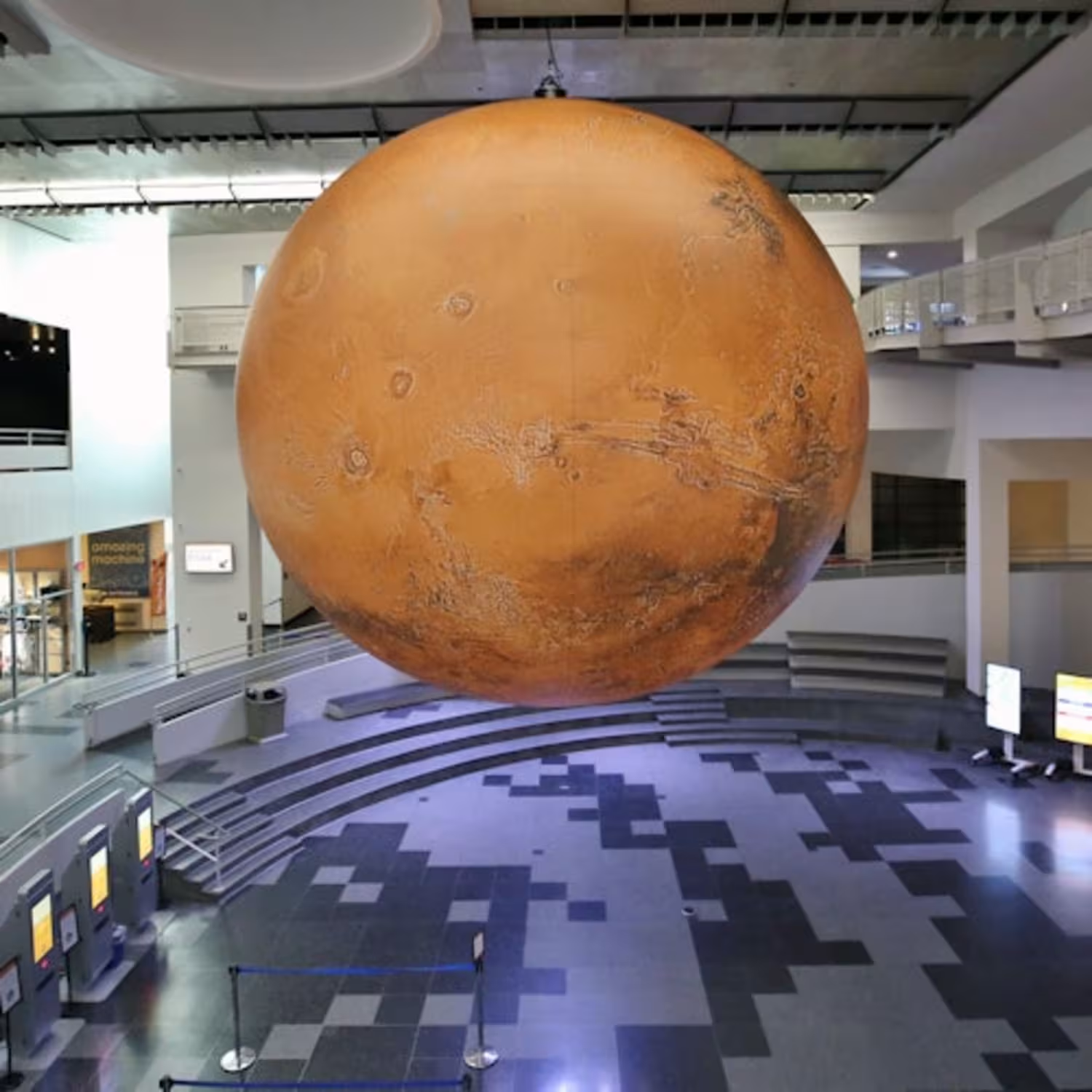
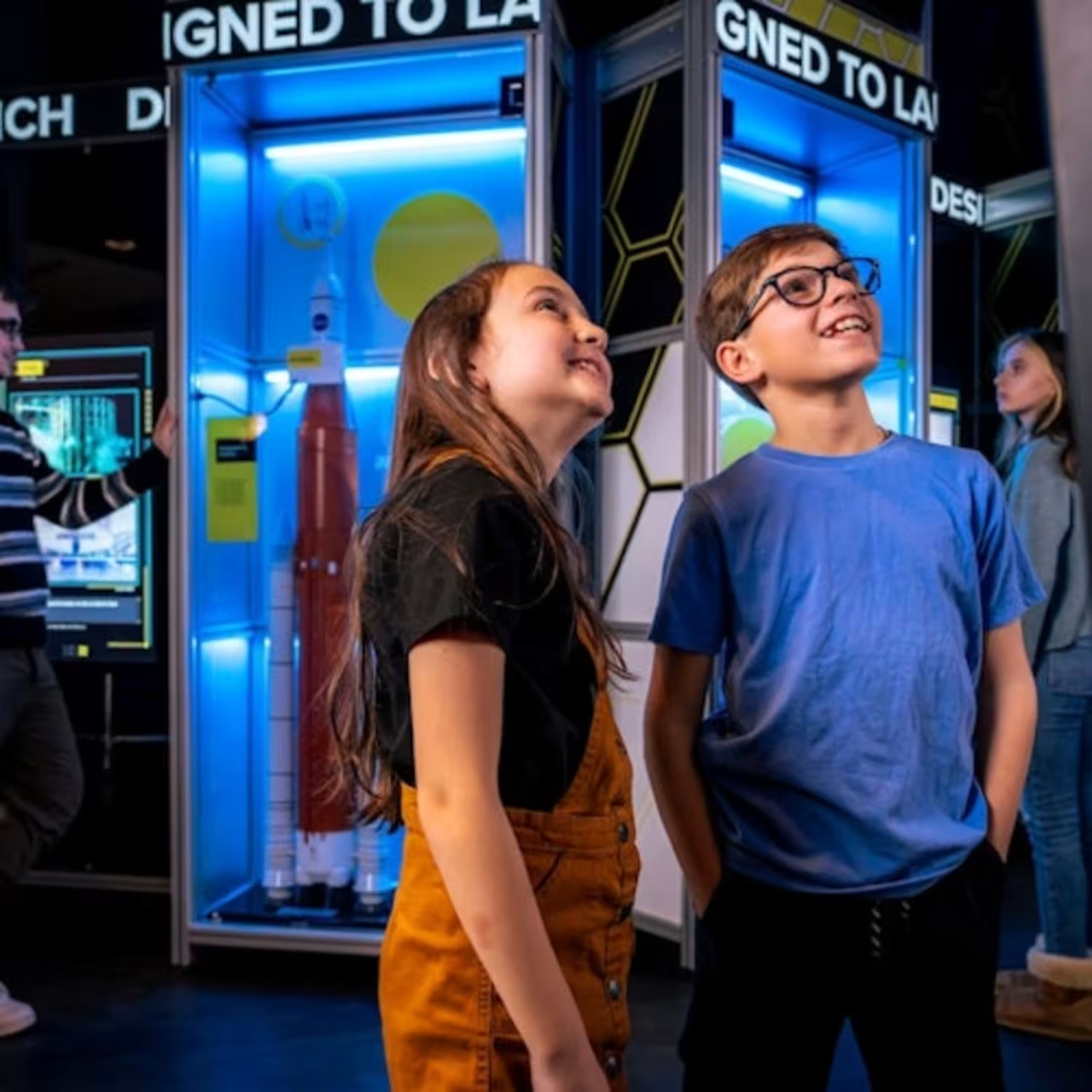
Wondrous Space opened on November 4, 2023 as the first of six new exhibits in the museum's long-term master plan. It covers 7,500 square feet on two floors and sits between the Fels Planetarium and the Holt and Miller Observatory. The first floor is built around immersive simulations, where you control forces of nature, travel across the universe and watch space phenomena; the upper floor looks at the future of life and work in space, new tools and technologies and careers in space exploration. In the Rover Design interactive you design and test your own exploration rover. At opening, the artifacts on loan included two rovers from Carnegie Mellon University and a 10-foot rocket engine from the Kennedy Space Center Visitor Complex.

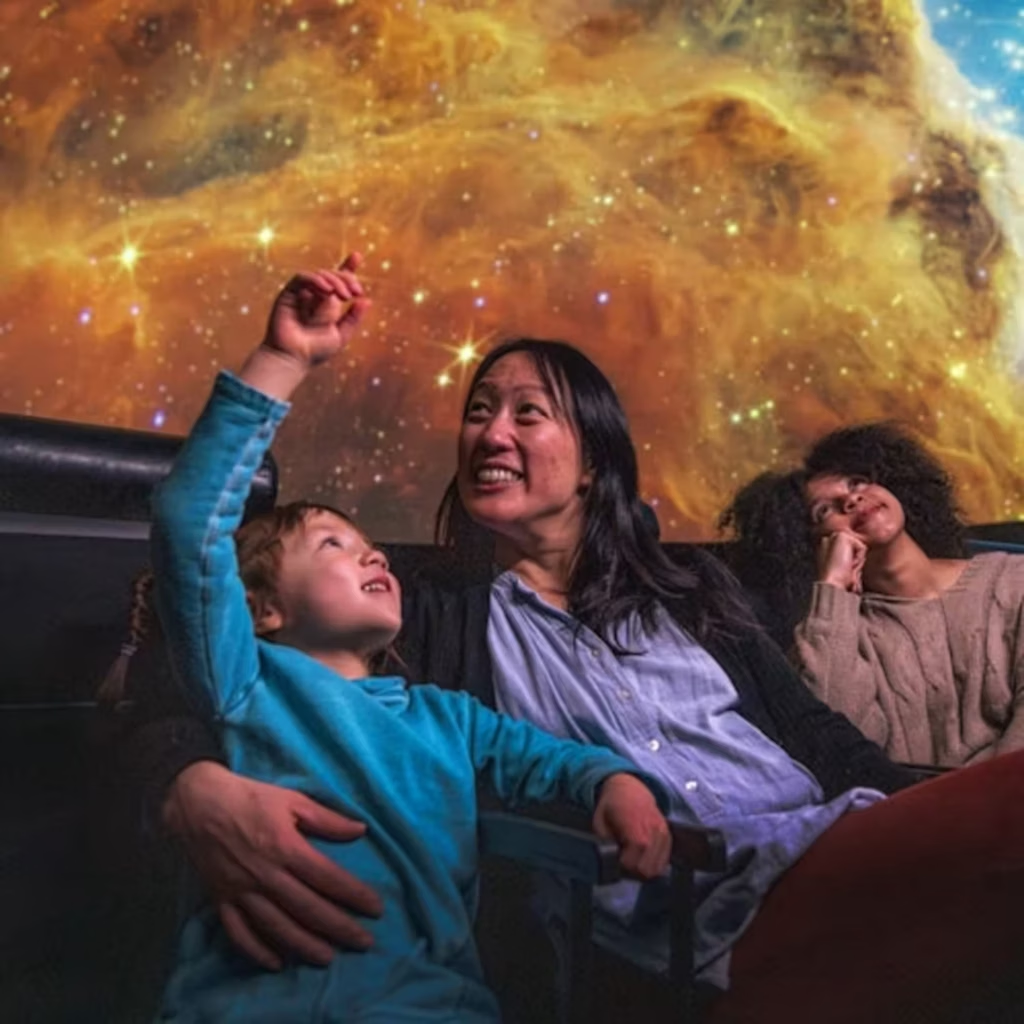
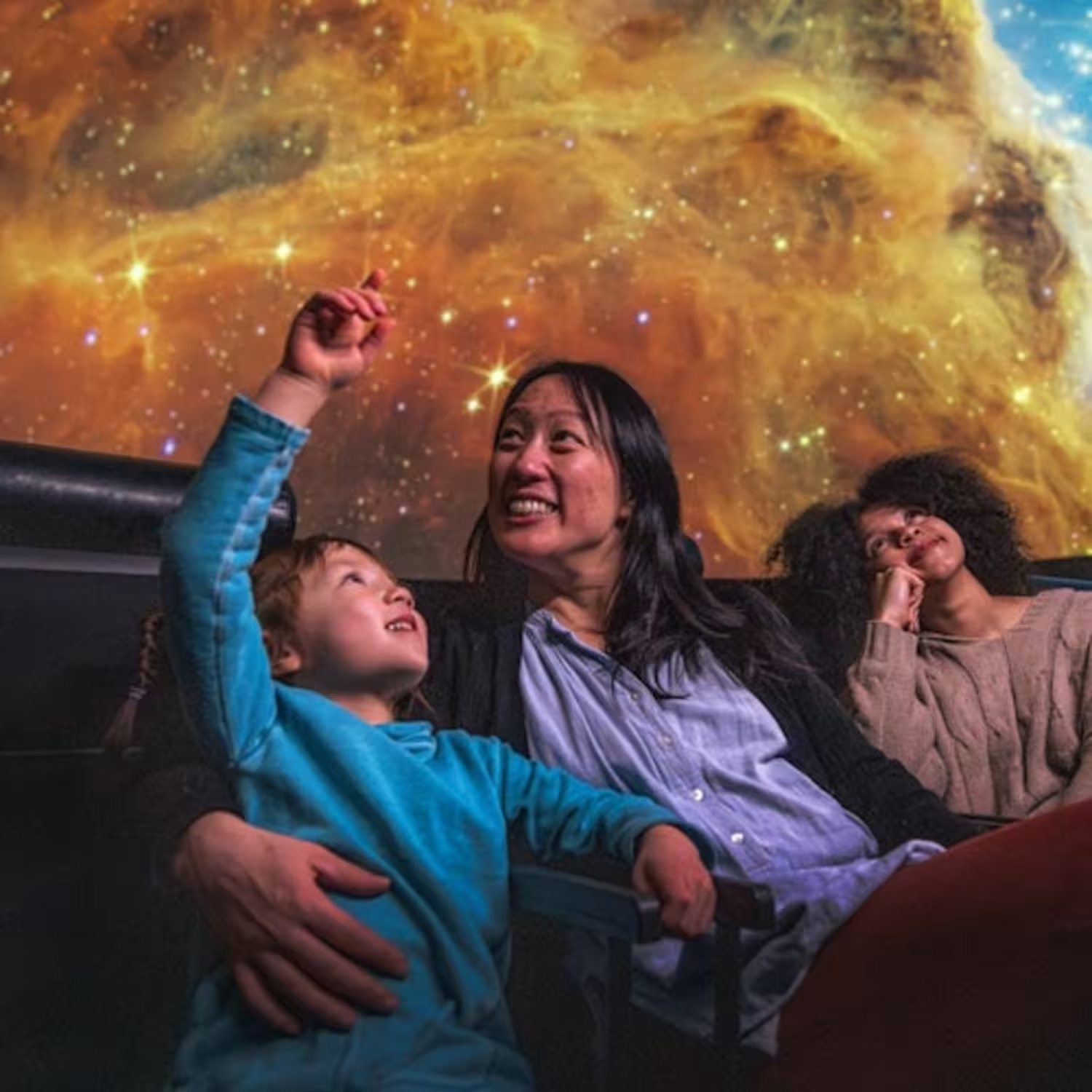
Next door, the Fels Planetarium dates from 1933, when it became the second planetarium built in the country. It was completely rebuilt in 2002 with a 60-foot dome, and today it presents astronomy shows under the stars. The Holt and Miller Observatory houses a 10-inch Carl Zeiss refracting telescope, one of the largest historical objects in the collection.

Your Brain and the Neural Climb

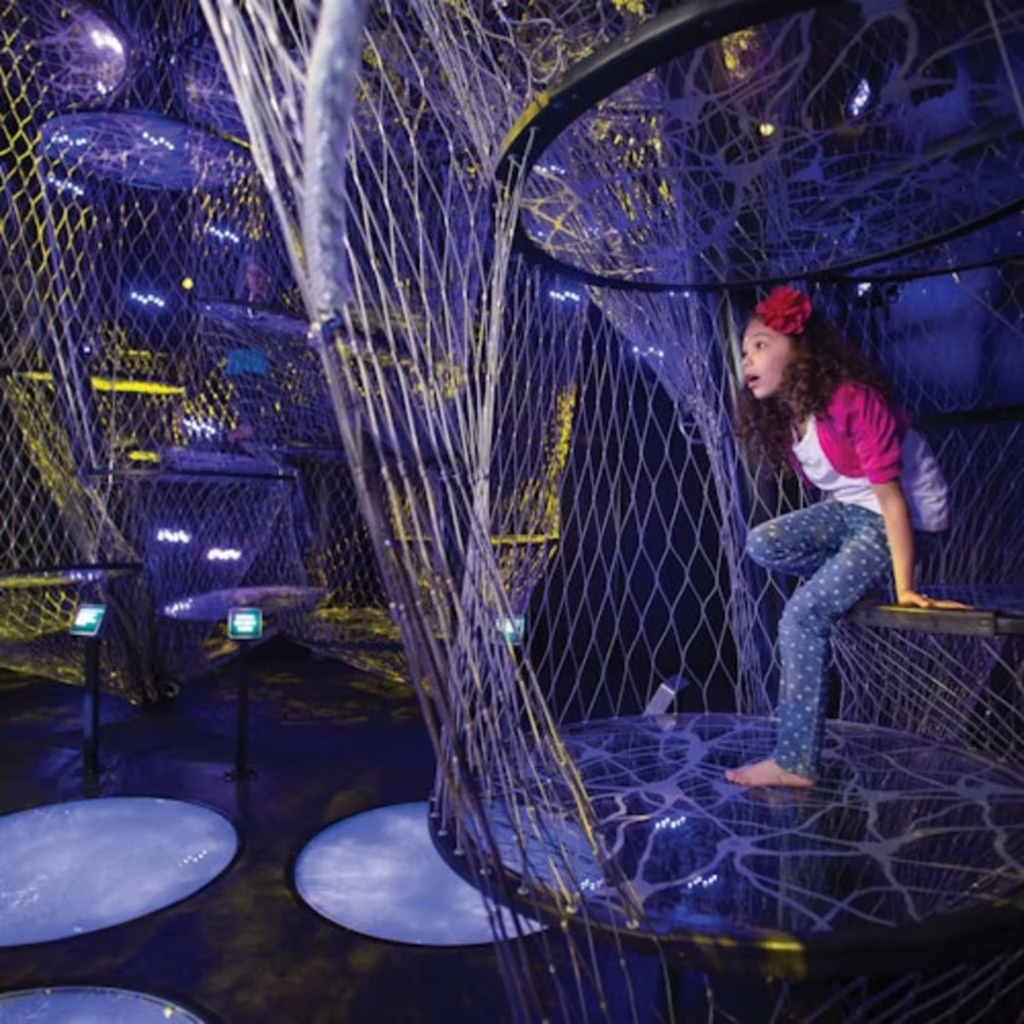
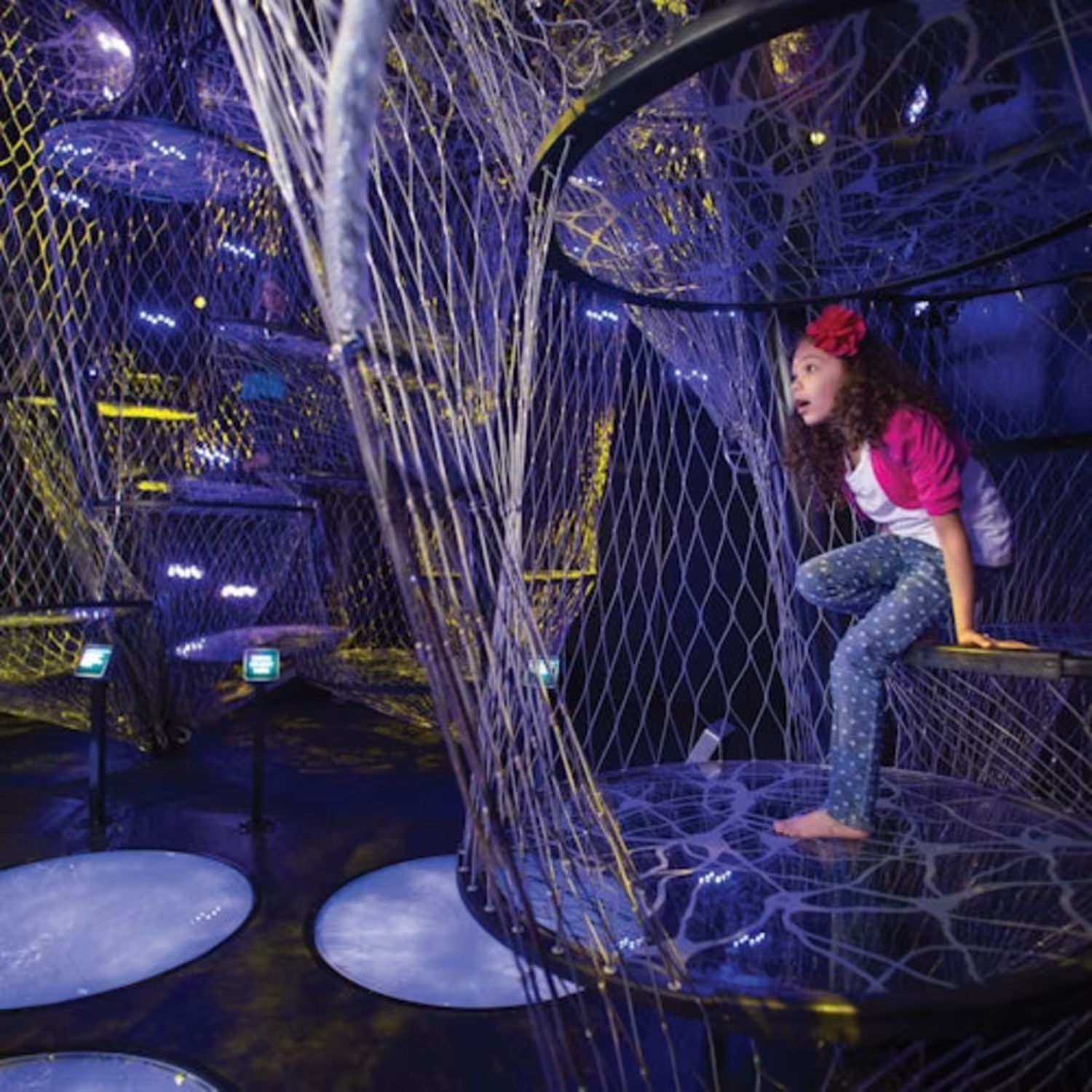
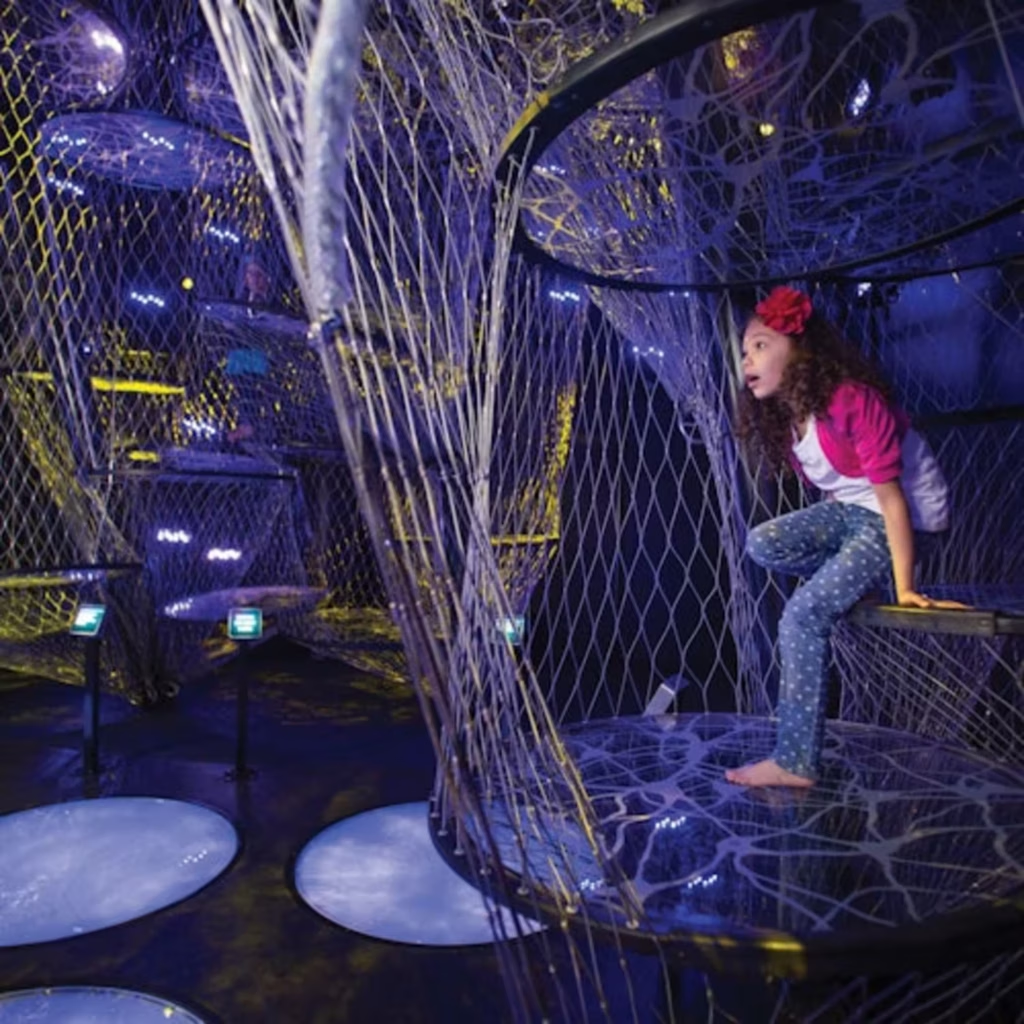
Child climbing through an exhibit at The Franklin Institute

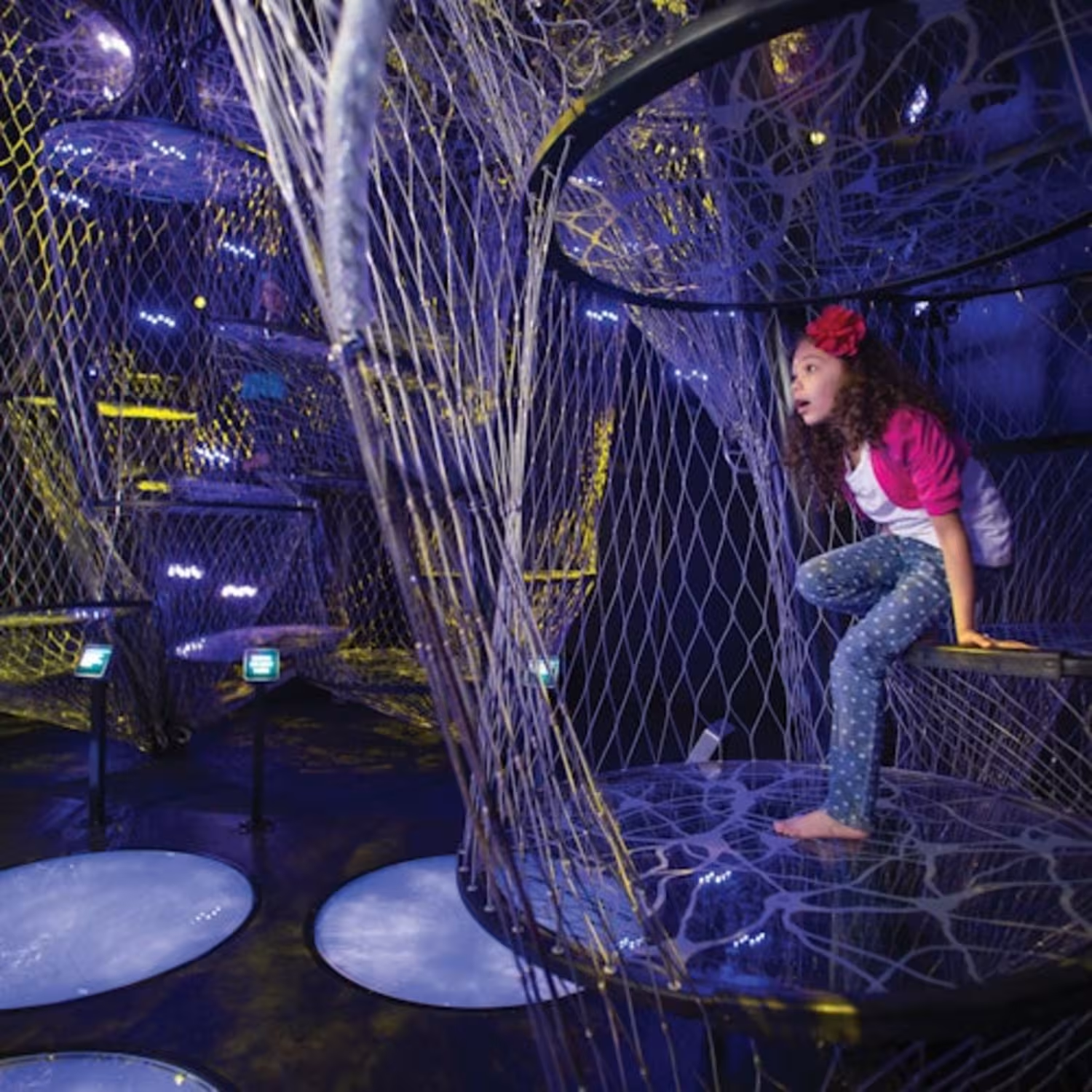
Your Brain fills the Frank Baldino, Jr. Gallery in the Nicholas and Athena Karabots Pavilion. Its centerpiece is the Neural Climb, an 18-foot climbing structure that takes you through a model of a neural network.

Around it, the exhibit explains how the brain interprets the world. A city street scene full of illusions shows how the brain resolves conflicting information, and the "Say That Again?" interactive demonstrates how we learn to understand distorted audio. Other hands-on displays show how neurons fire, how signals travel and how the brain builds an image step by step. Elsewhere, SportsZone looks at the science of the moving body, and Sir Isaac's Loft lets you experiment with falling objects, chain reactions and optical illusions.

The Benjamin Franklin National Memorial
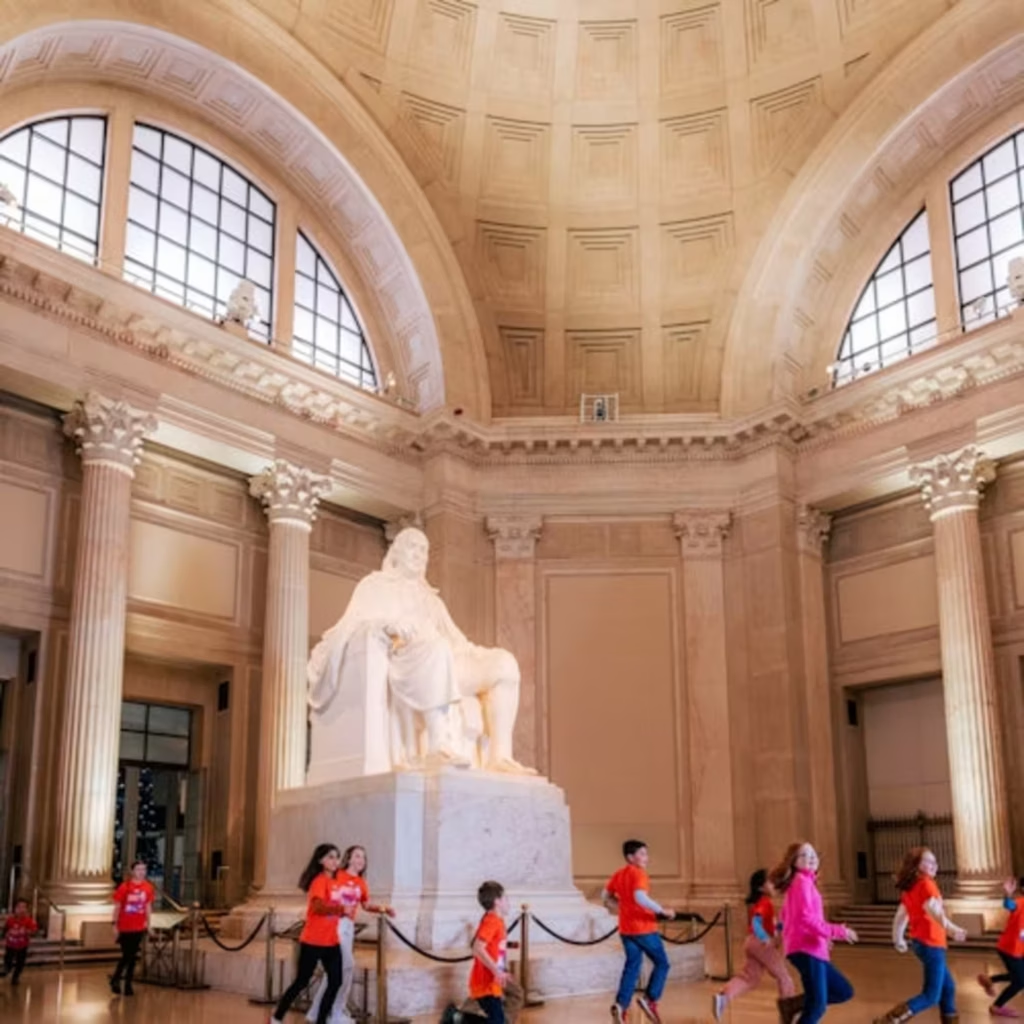
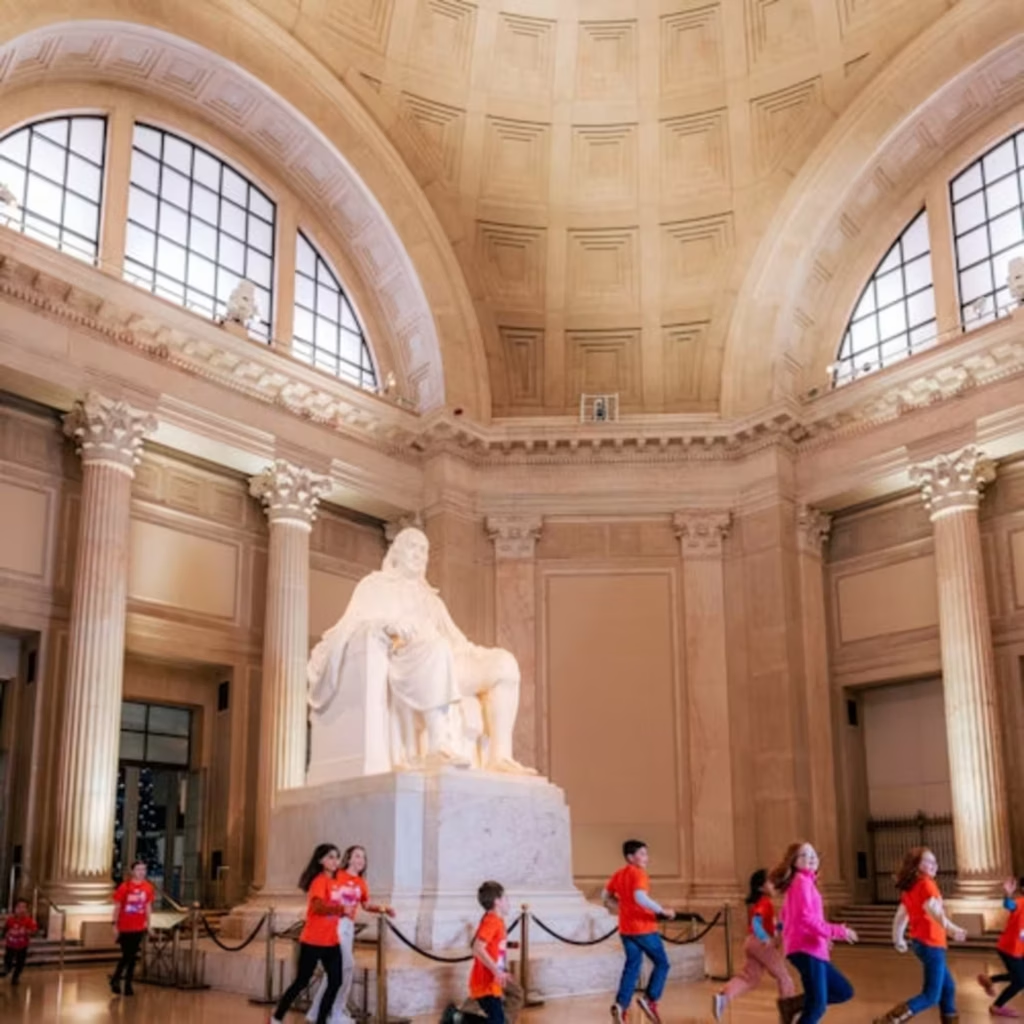
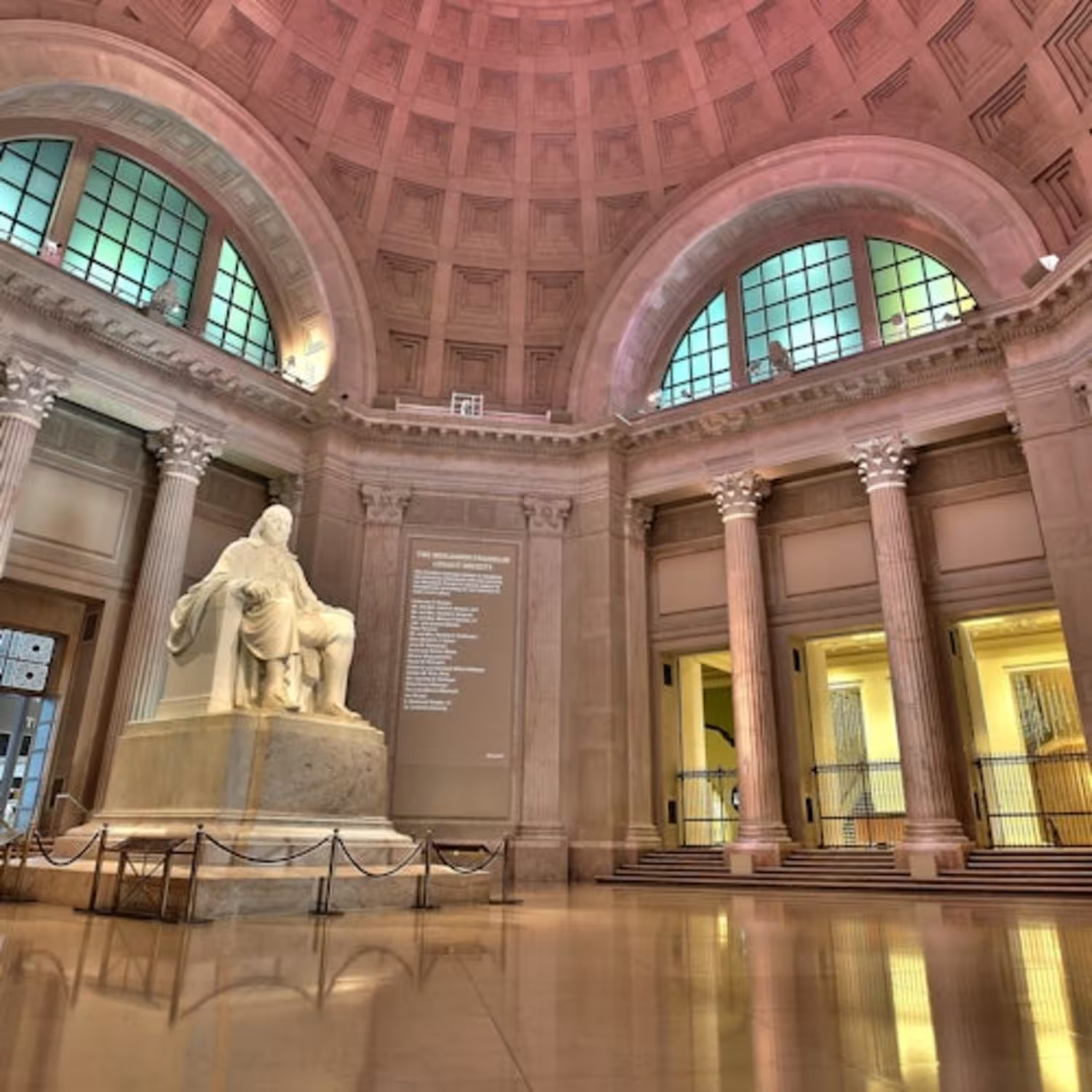
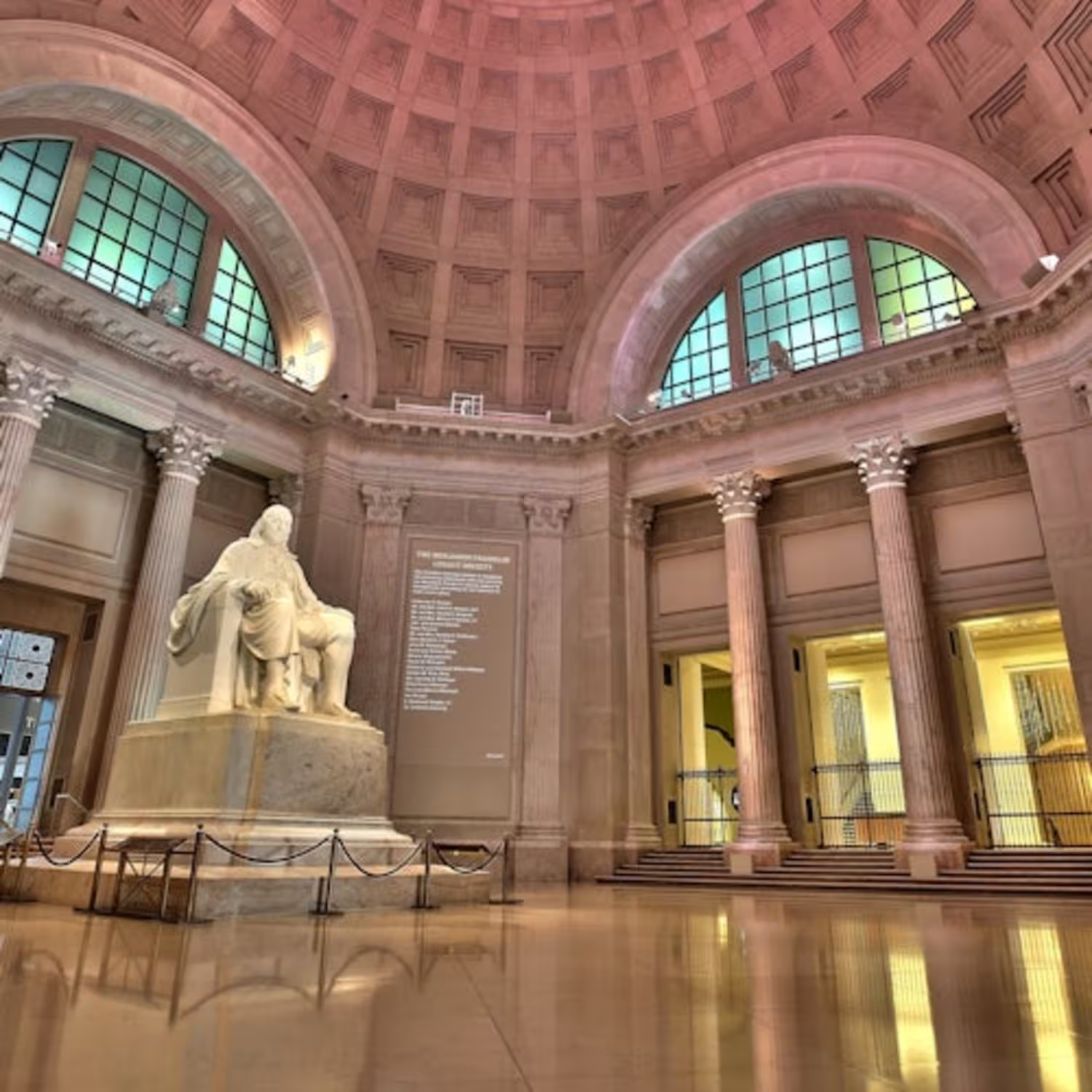
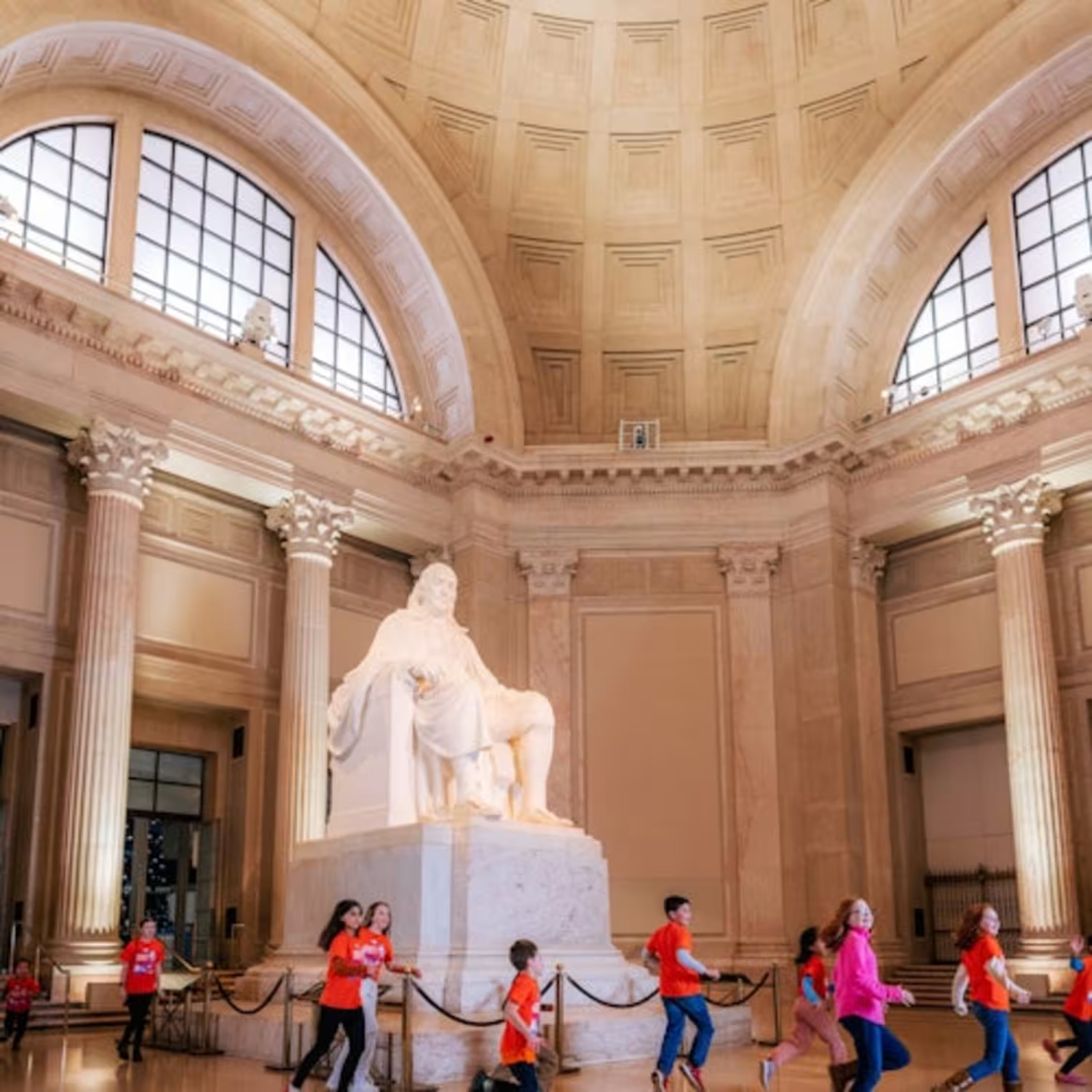
Benjamin Franklin statue in the memorial rotunda at The Franklin Institute

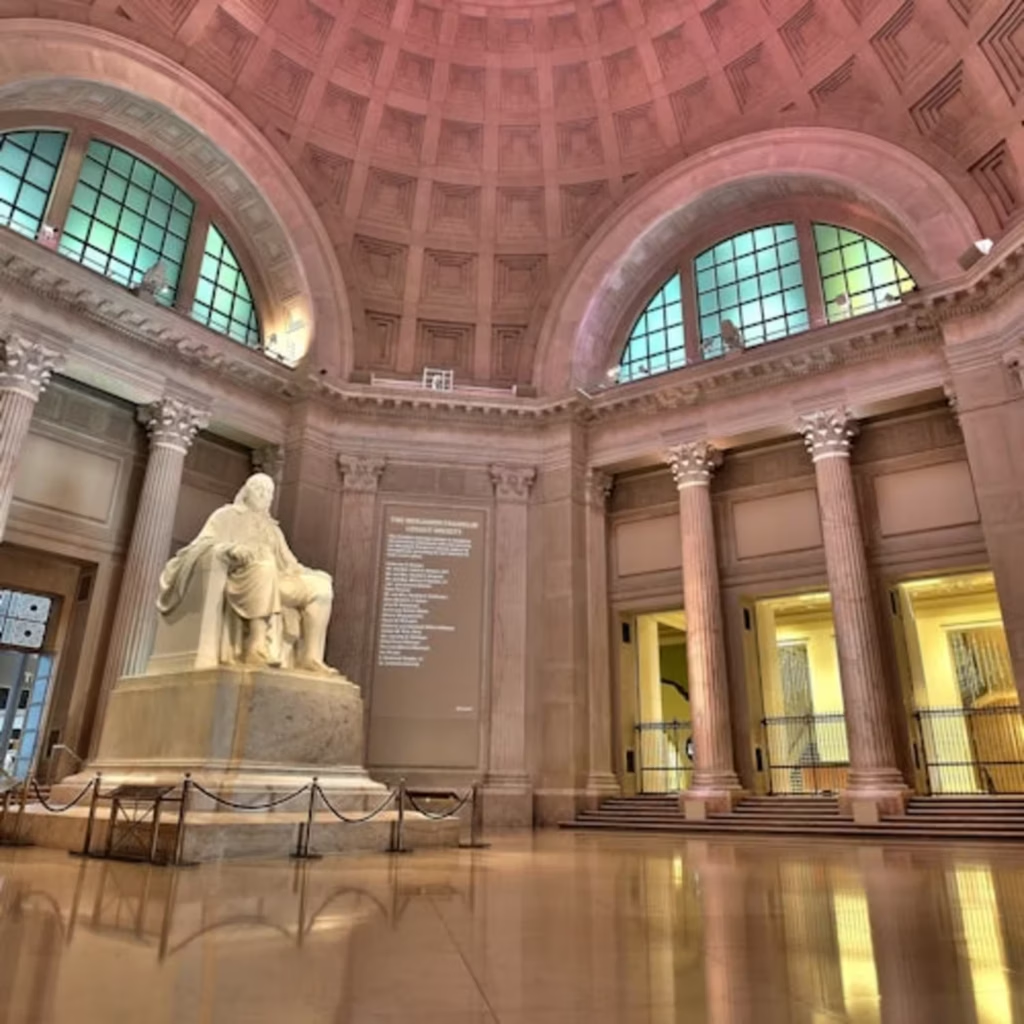
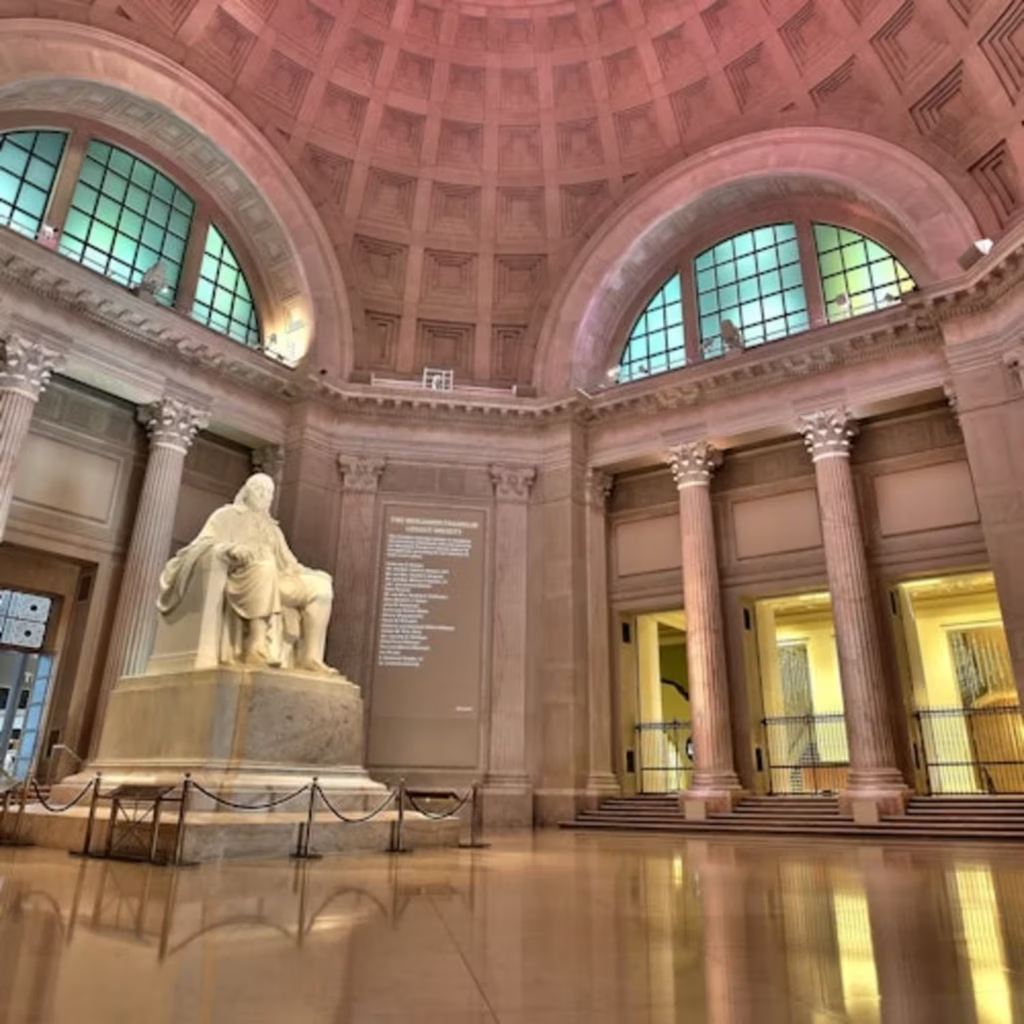
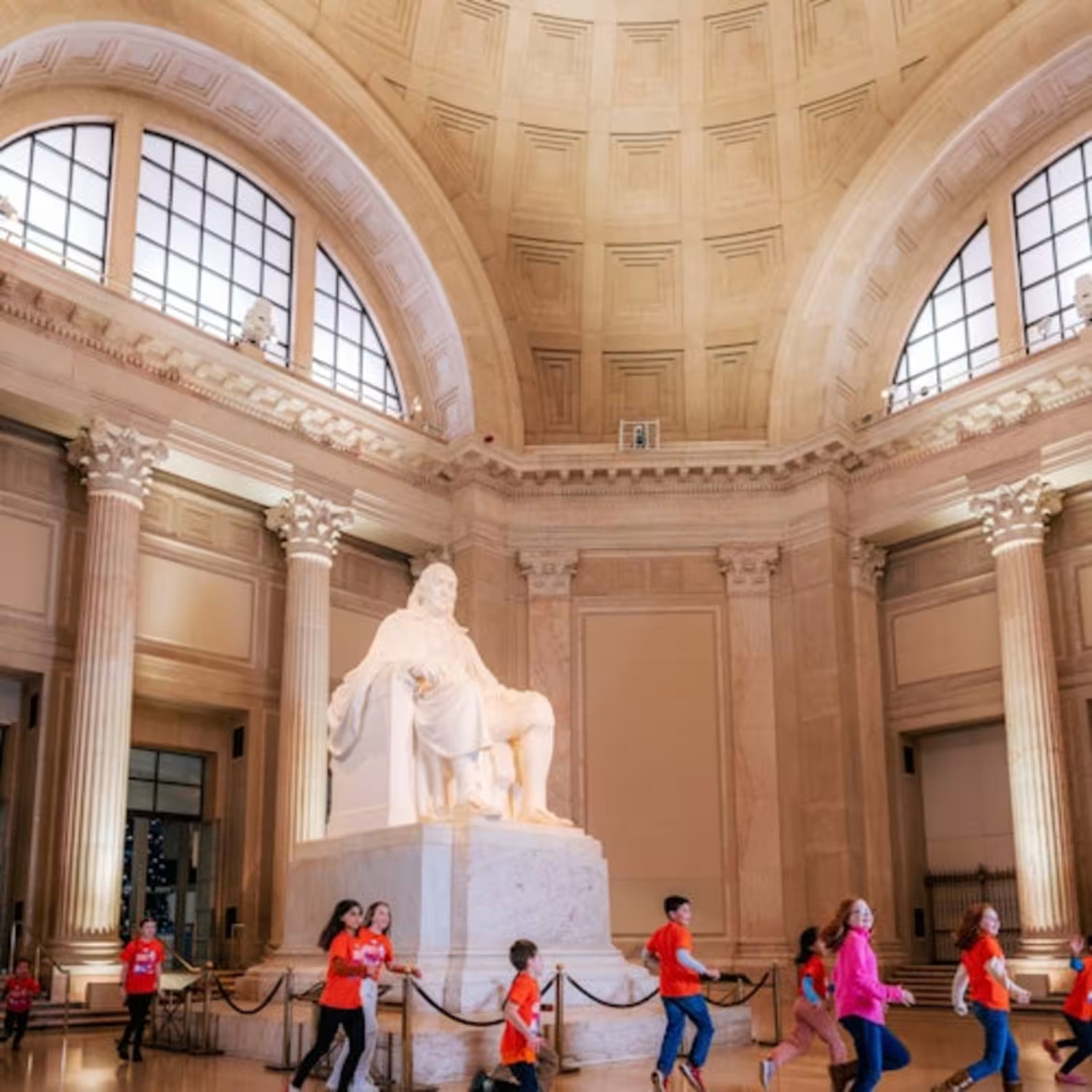
The museum is named for Benjamin Franklin, and its grand rotunda is home to the Benjamin Franklin National Memorial. At its heart is a 20-foot marble statue of Franklin by the sculptor James Earle Fraser. It is a quiet, impressive space and a natural place to start or end your visit.

Franklin's story continues in the Hamilton Collections Gallery, a two-story showcase of the museum's collections that opened on November 23, 2024. Its first exhibit, "200 Stories for 200 Years", brings together objects such as the Weigel Celestial Globe, Franklin's printing press and wax cylinder records. The gallery is built around the Baldwin 60000, a 350-ton steam locomotive donated by Samuel M. Vauclain in 1933, which now stands on a cutaway floor that shows its original steel and concrete bridge supports.

Live science and seasonal programs

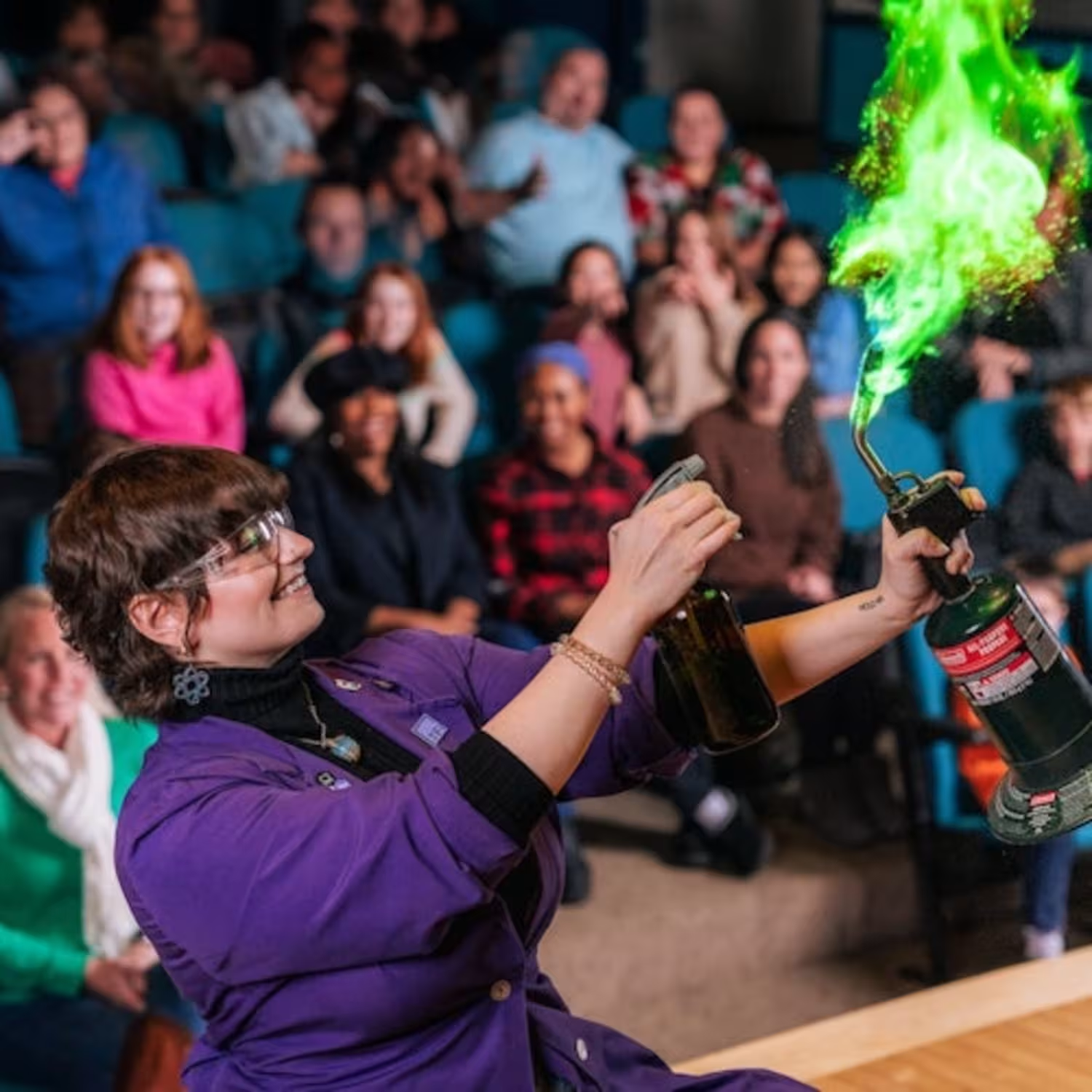
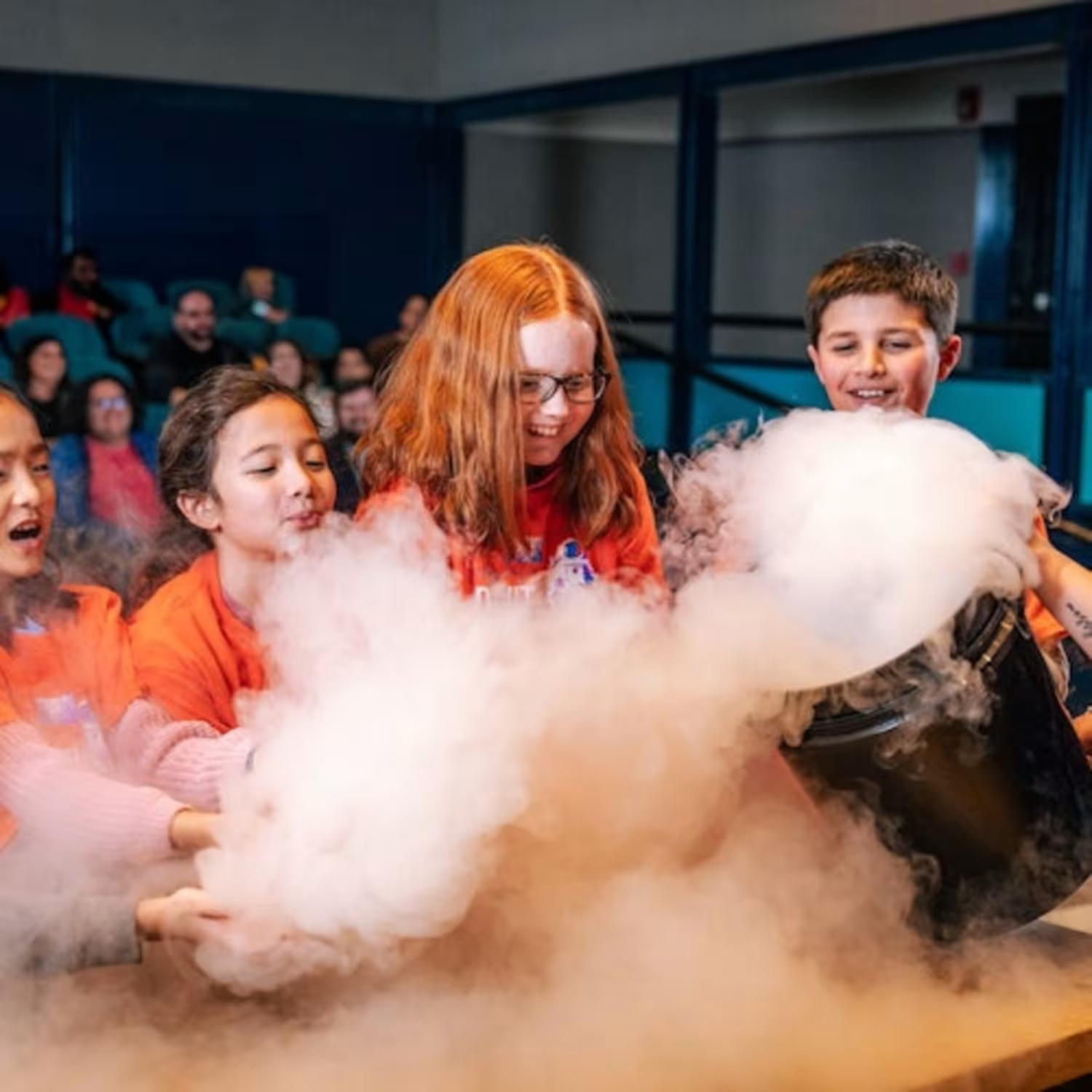
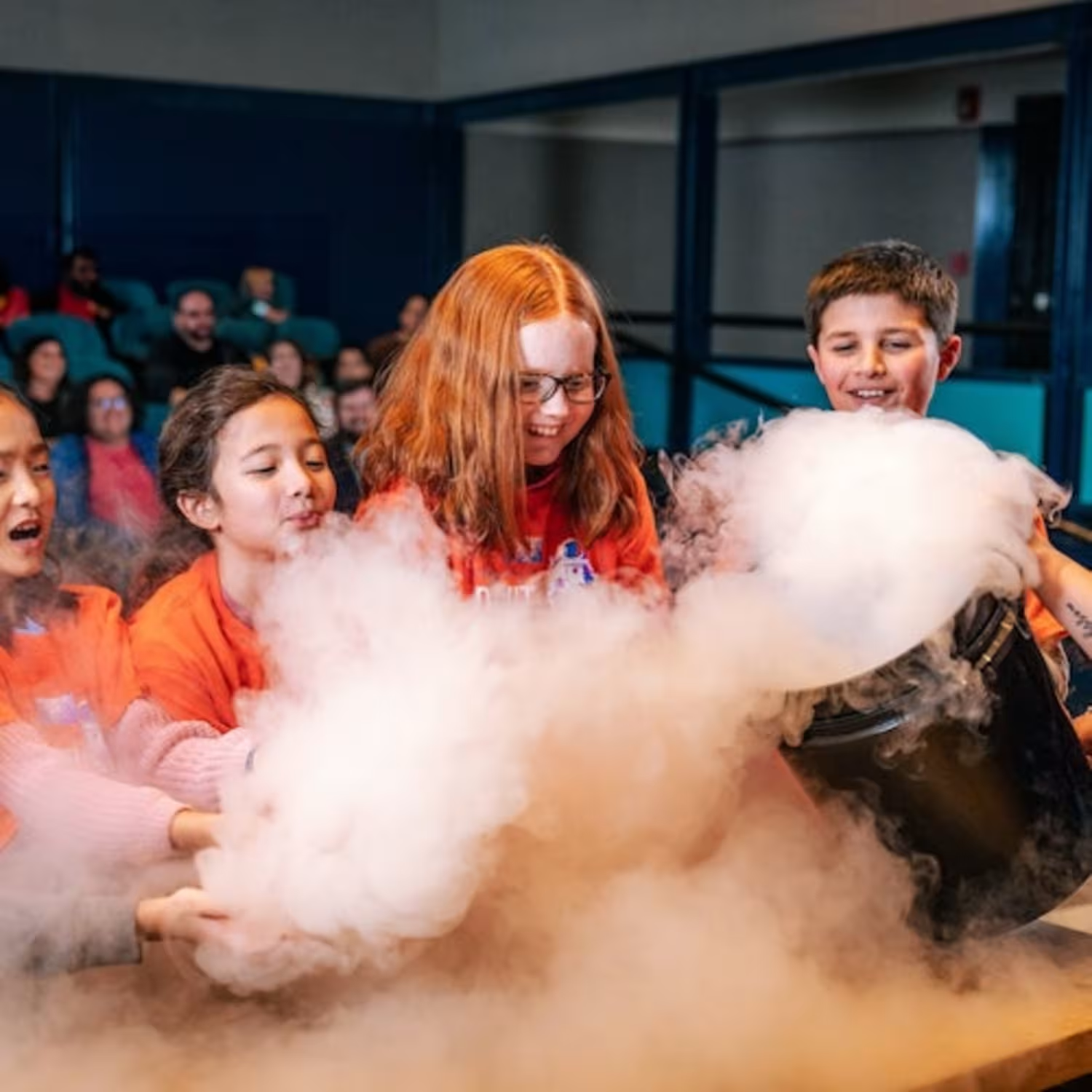
Live science demonstration with smoke effects at The Franklin Institute

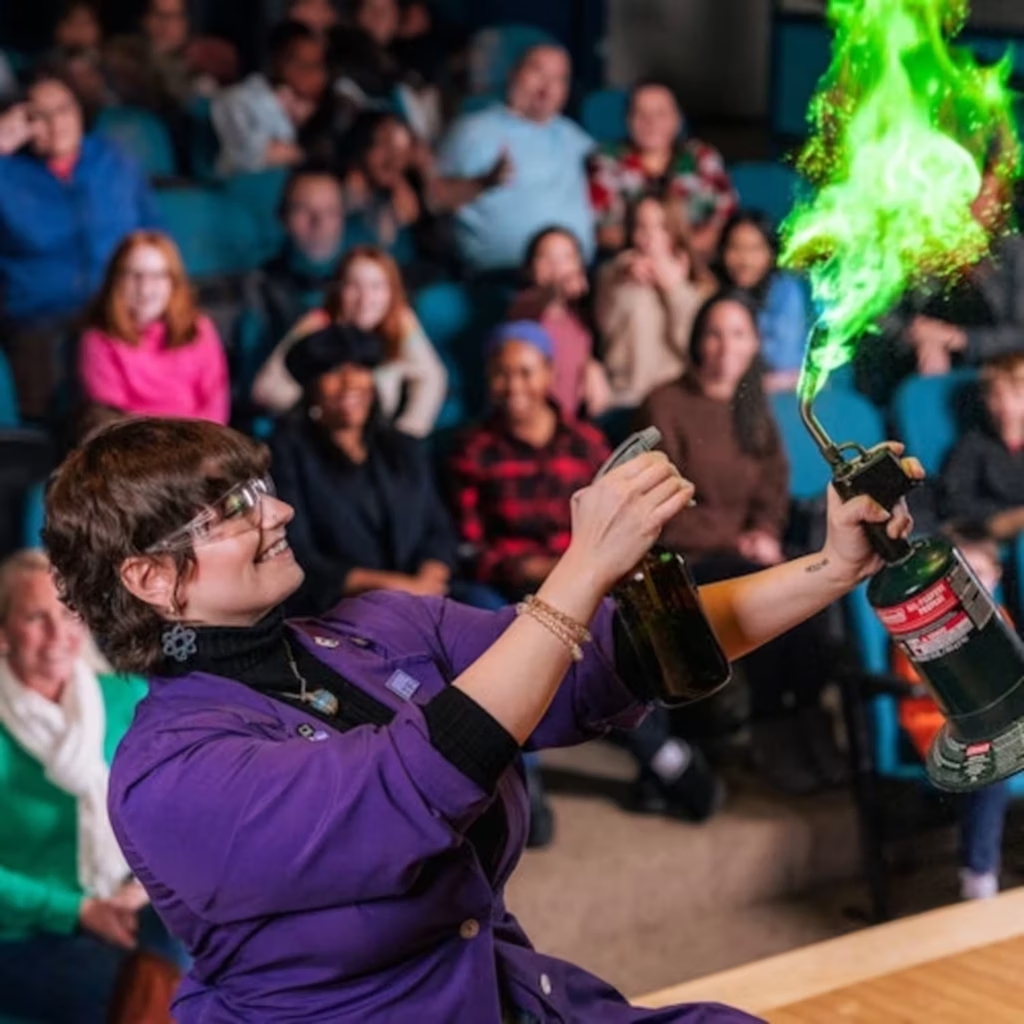
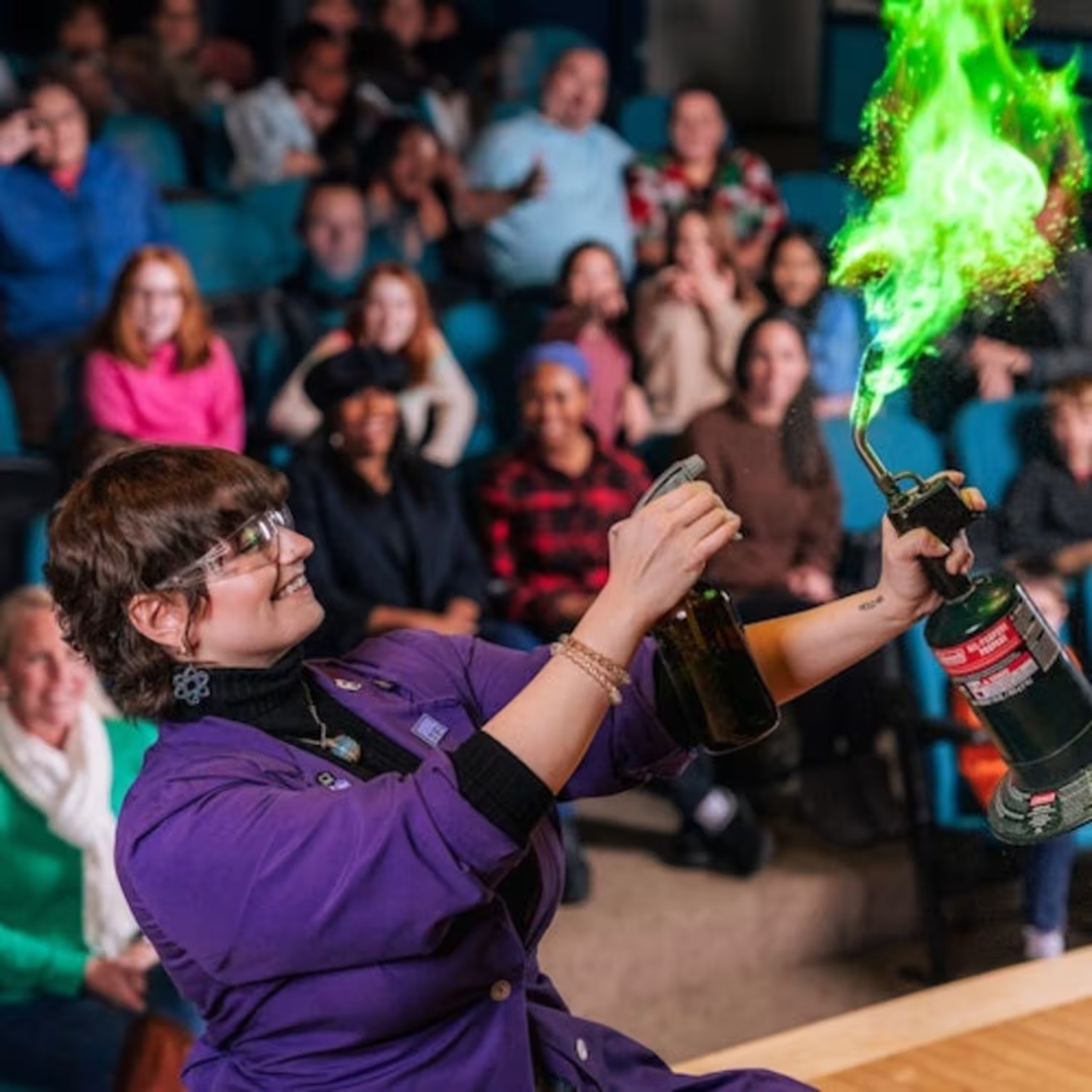
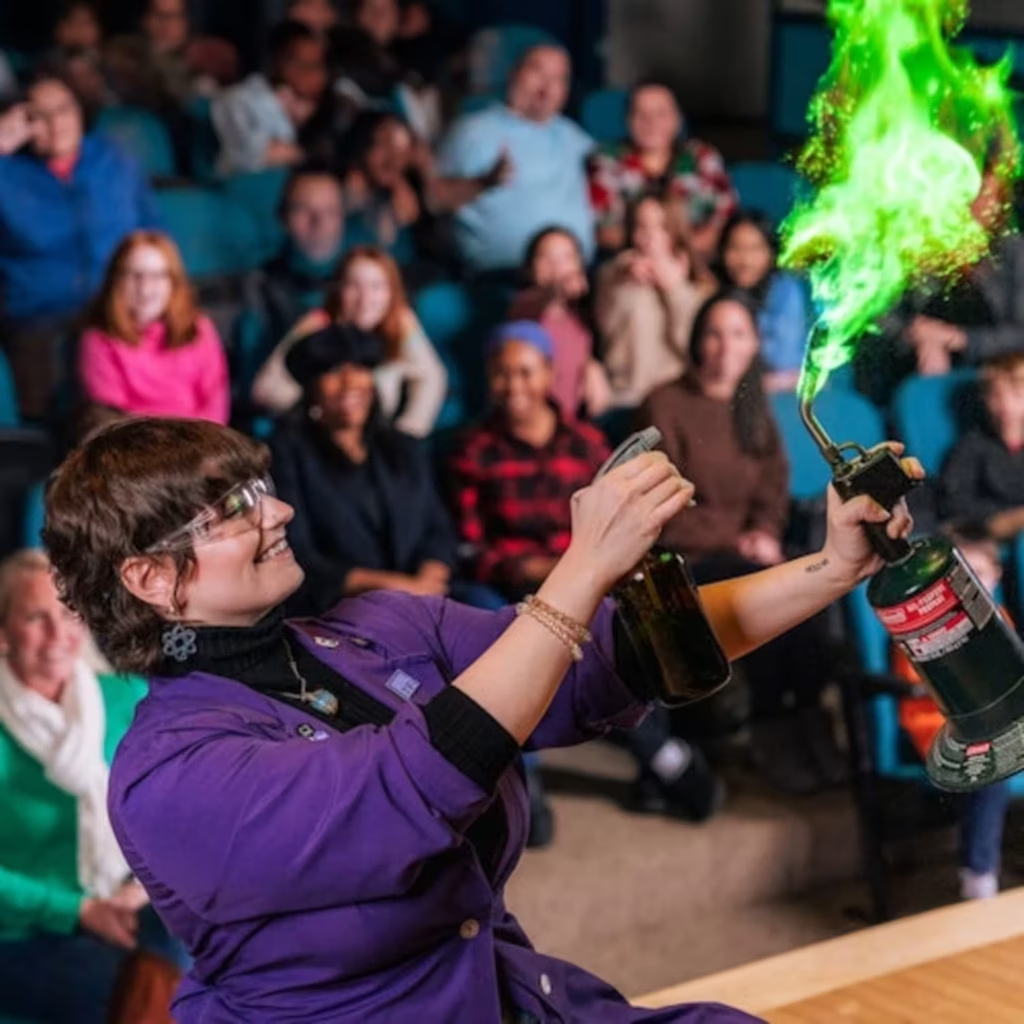
Exhibits are only part of a visit. Every day the museum runs live science demonstrations in the Musser Theater, where educators use experiments to explain key scientific ideas, and our ticket includes these daily presentations. Check the schedule when you arrive and build one or two shows into your route, as they are a good break between galleries.

O Amazing Machine exhibit compares historic machines from the collection with the everyday devices they inspired, and seasonal family programs change through the year. For adults, Science After Hours evenings open the museum to visitors aged 21 and over. The museum is in the middle of a multi-year master plan, with new exhibits planned on earth systems, advanced machines and robotics, the built environment and computer science, so the galleries keep evolving.

Planning your route through the museum

Allow 3 a 4 horas to see the main exhibits, the planetarium and a live demonstration.

Visit the Giant Heart early in your day, as it is the museum's best-known exhibit.

Pair Wondrous Space with the Fels Planetarium, as they sit next to each other.

Check the planetarium and Musser Theater show times when you arrive and plan the galleries around them.

Finish in the rotunda at the Benjamin Franklin National Memorial and the Hamilton Collections Gallery.

See The Franklin Institute opening hours before you go to plan your arrival.

Quick tips before you go

Book your entry before the day so you can go straight in.

Wear comfortable shoes: the Giant Heart and the Neural Climb are both hands-on and active.

Leave time for the Hamilton Collections Gallery, which spans two floors.

With young children, start with Sir Isaac's Loft and the Giant Heart.

With teenagers, head first to Your Brain, SportsZone and Wondrous Space.

Read our directions to The Franklin Institute for transport and parking.

Combine the Franklin Institute with more of Philadelphia

The Franklin Institute is one stop on a great museum day in Philadelphia. For ancient history, continue at the Penn Museum. On the waterfront, the Independence Seaport Museum lets you climb aboard the historic Cruiser Olympia, and across the river the Battleship New Jersey Museum tells the story of a World War II battleship. See all our Philadelphia museums.

The Franklin Institute exhibits: FAQs

Quais são as principais exposições do Franklin Institute?

Os destaques são a Body Odyssey com o Giant Heart, o Wondrous Space, o Your Brain com o Neural Climb, o SportsZone, o Sir Isaac's Loft, a Hamilton Collections Gallery com a locomotiva Baldwin 60000 e o Benjamin Franklin National Memorial.

O “Giant Heart” ainda está no Instituto Franklin?

Sim. O “Giant Heart”, inaugurado em 1954, é a atração principal do “Body Odyssey”, que foi inaugurado em 23 de novembro de 2024.

Qual é o tamanho do Giant Heart?

É cerca de 15.000 vezes maior do que um coração humano real, com túneis e escadas pelas quais os visitantes podem subir.

O Fels Planetarium está incluído no ingresso?

O ingresso para o Instituto Franklin inclui o Planetário Fels e as suas apresentações sobre o espaço. Verifique as opções de ingressos apresentadas no momento da reserva.

Qual é a idade do Fels Planetarium?

Foi inaugurado em 1933 como o segundo planetário dos Estados Unidos e foi reconstruído em 2002 com uma cúpula de 60 pés.

O que é o Wondrous Space?

Uma exposição de dois andares, com 7.500 pés quadrados, inaugurada em 4 de novembro de 2023, com simulações imersivas e uma área interativa dedicada ao design do Rover.

Qual é a altura do Neural Climb?

A instalação “Neural Climb”, na exposição “Your Brain”, tem 18 pés de altura.

A locomotiva Baldwin ainda está em exposição?

Yes. The 350-ton Baldwin 60000 is the centerpiece of the Hamilton Collections Gallery, which opened on November 23, 2024.

How long should I spend at The Franklin Institute?

Allow 3 to 4 hours to see the main exhibits, a planetarium show and a live science demonstration.

Who made the Benjamin Franklin statue?

The 20-foot marble statue in the Benjamin Franklin National Memorial is by the sculptor James Earle Fraser.

When was The Franklin Institute founded?

The Franklin Institute was founded on February 5, 1824 and marked its 200th anniversary in 2024.

About this guide

Sources: The Franklin Institute, Exhibits and Experiences; The Franklin Institute, press release on reimagined exhibits for its bicentennial year (2024); The Franklin Institute, Wondrous Space press release (2023); The Franklin Institute, Your Brain; Wikipedia, Fels Planetarium.